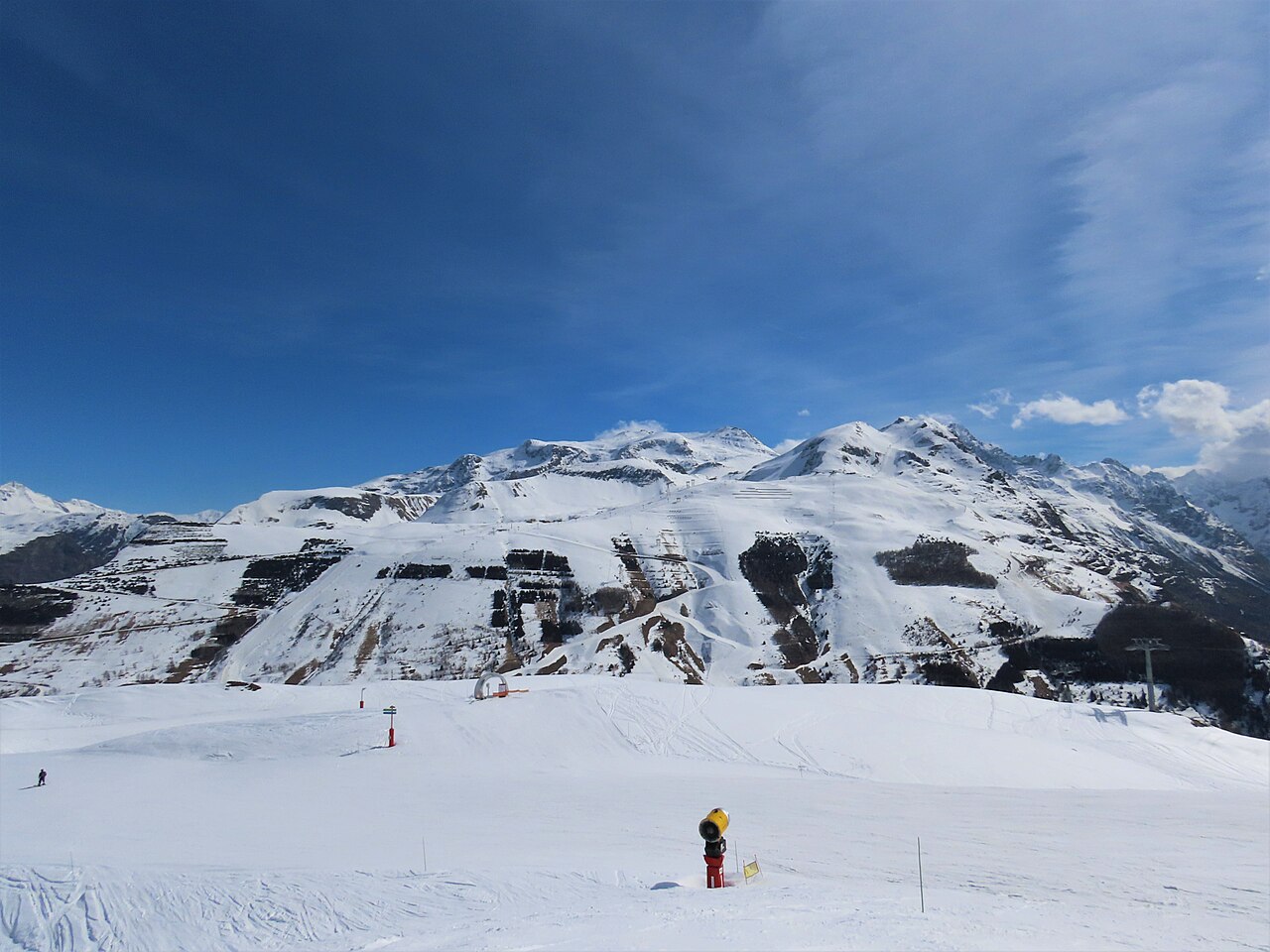
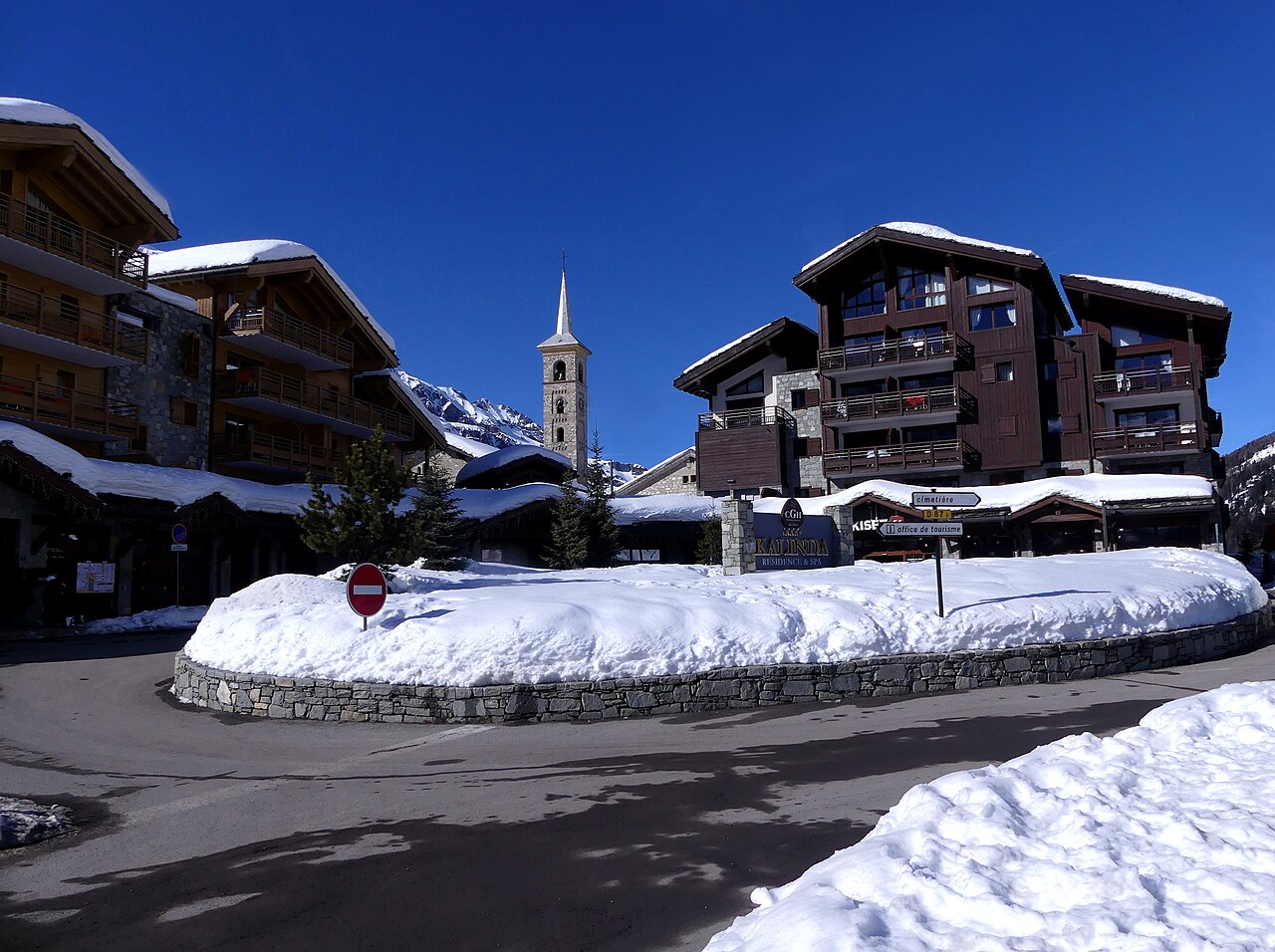
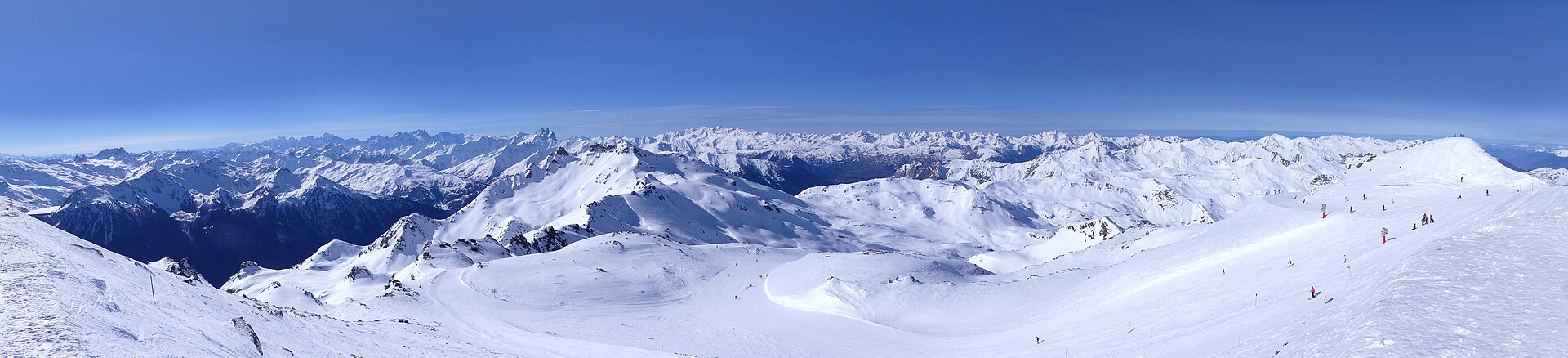
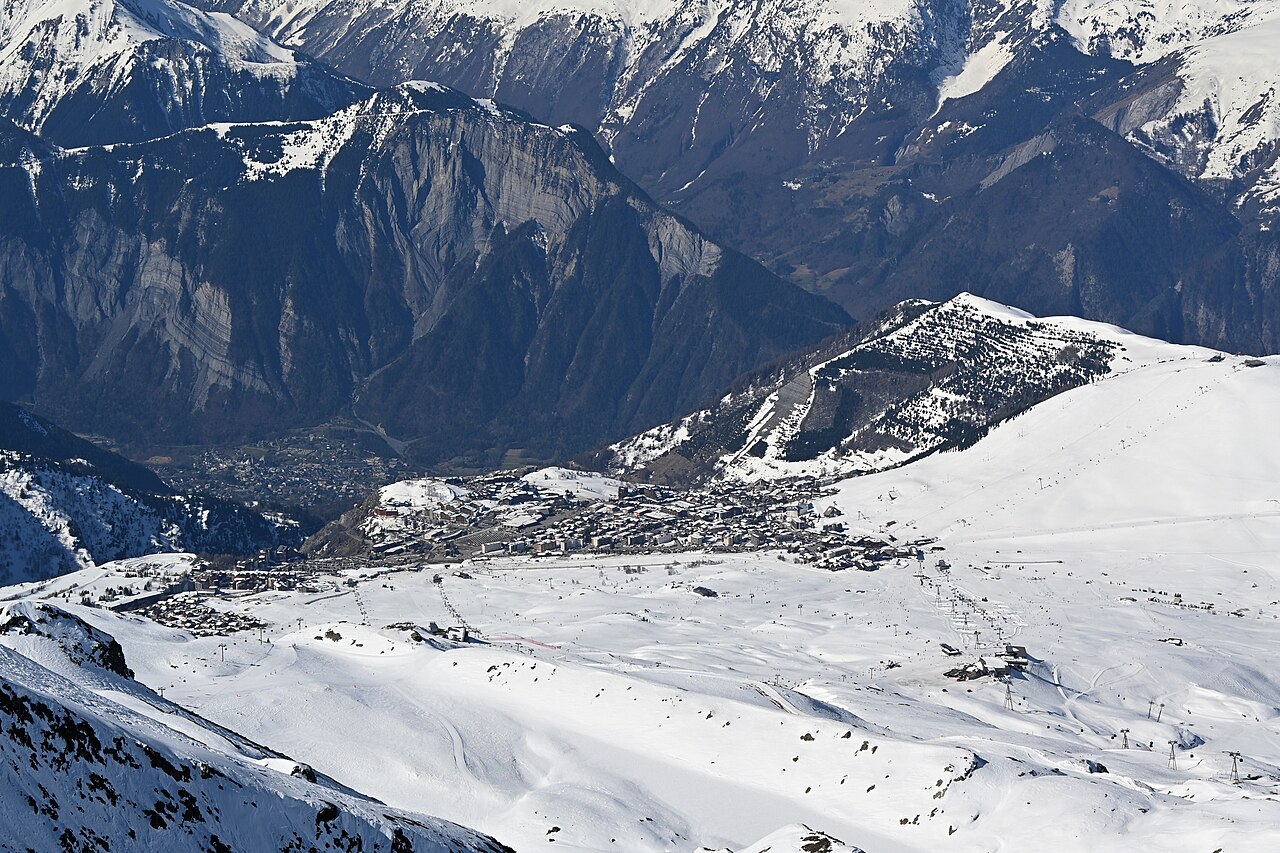
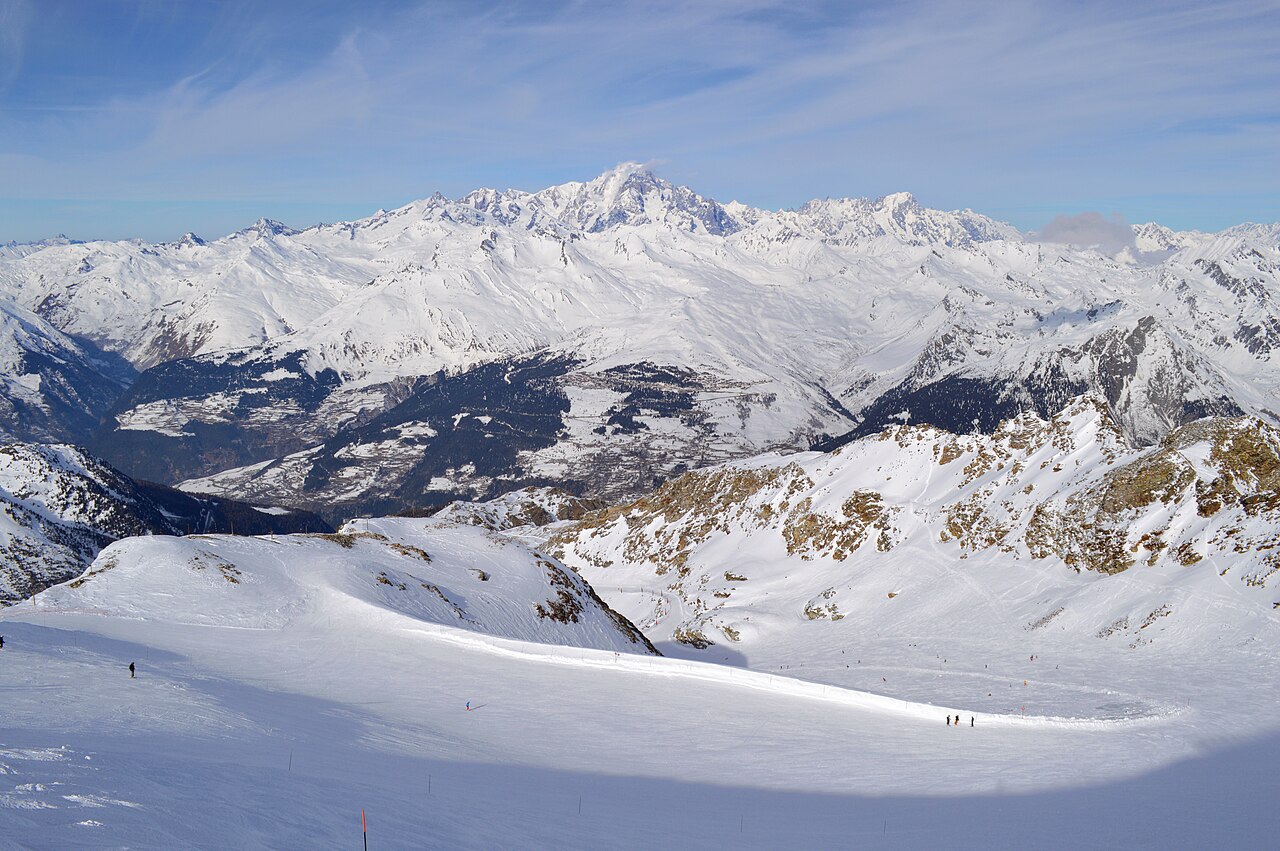
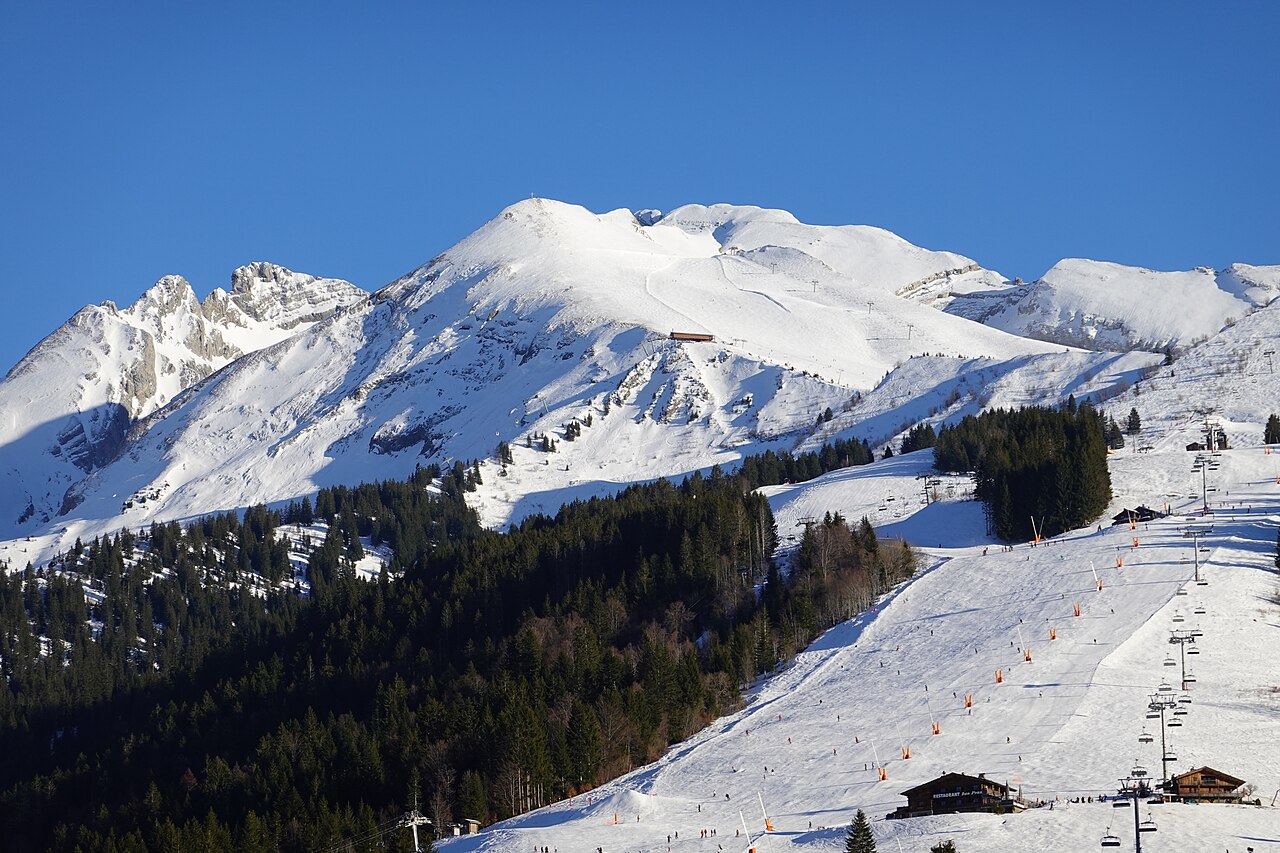
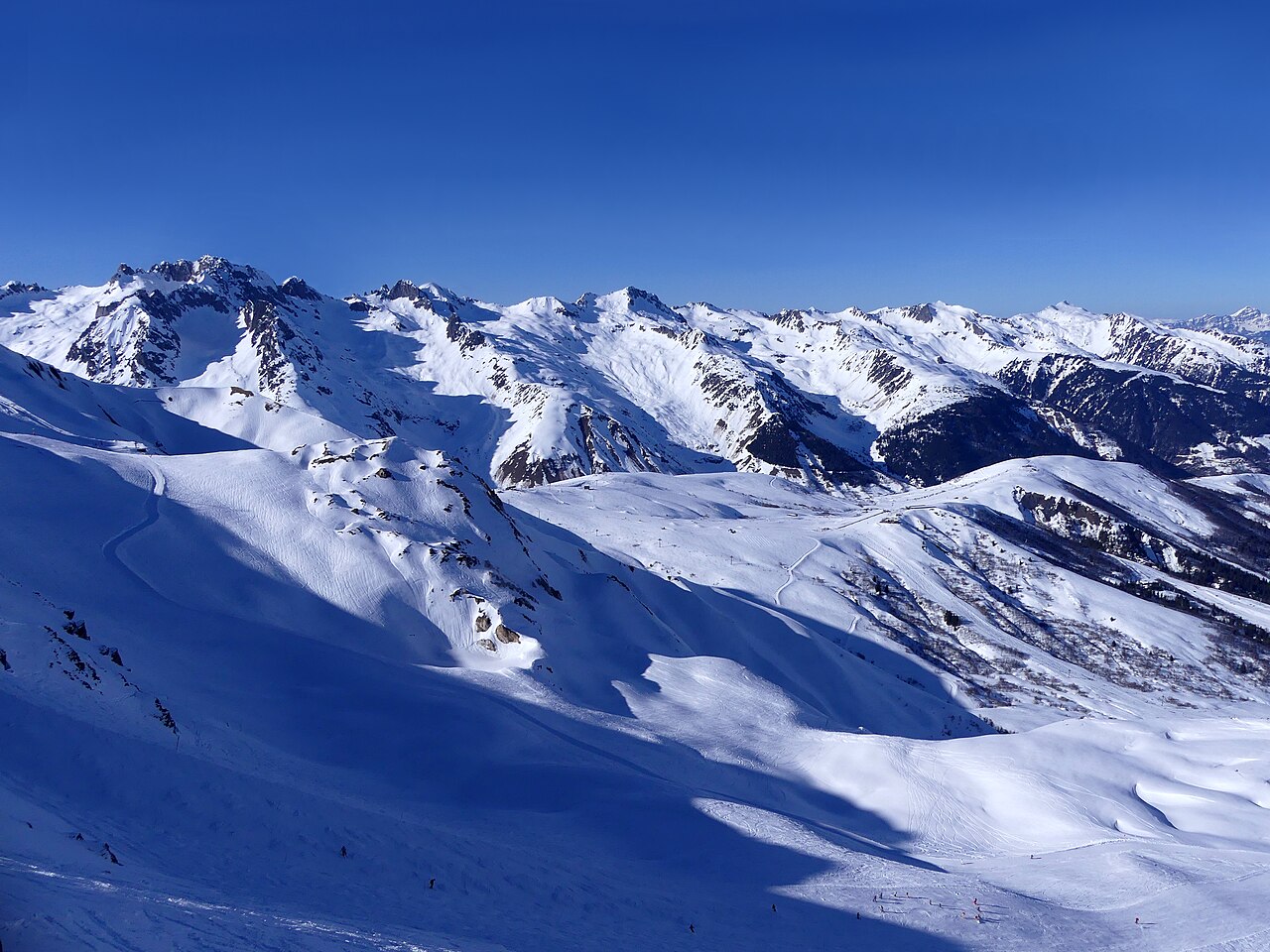
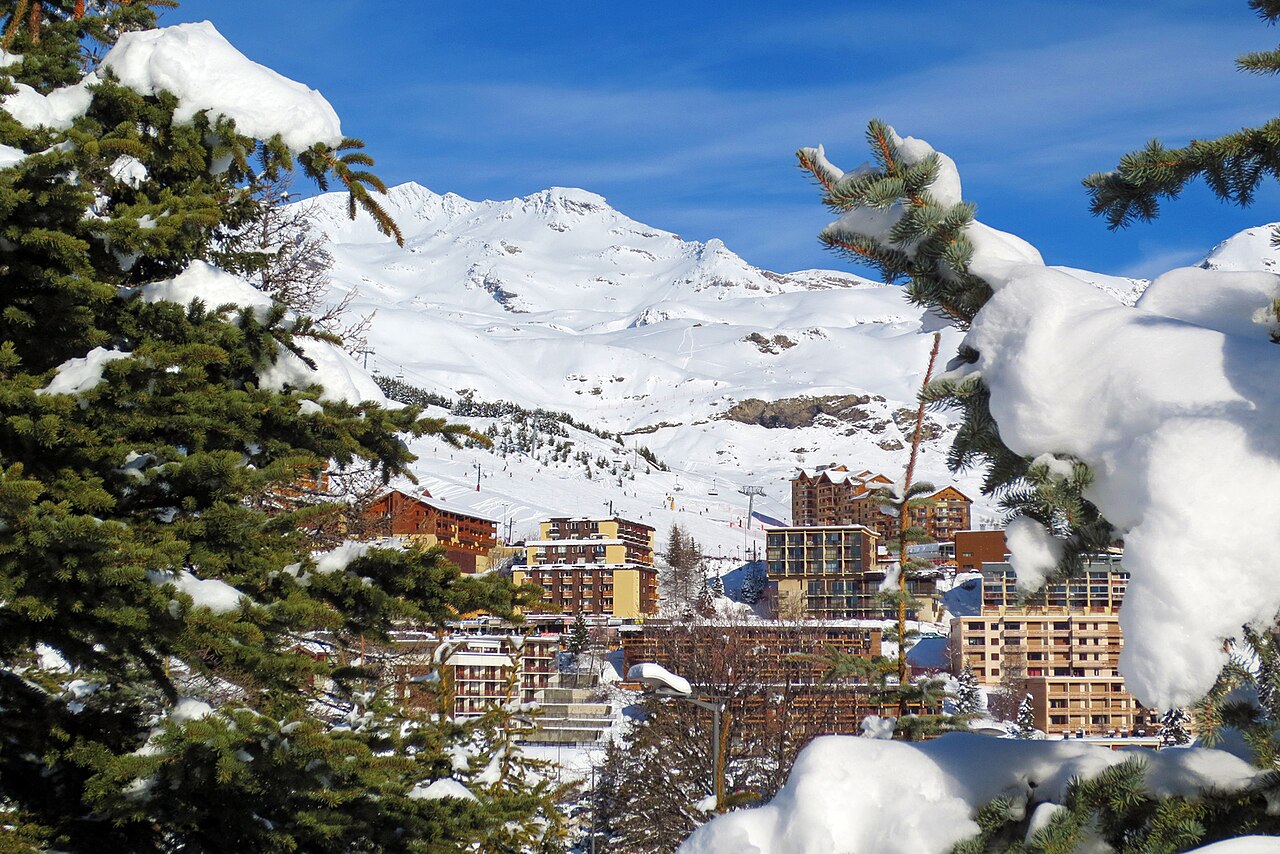
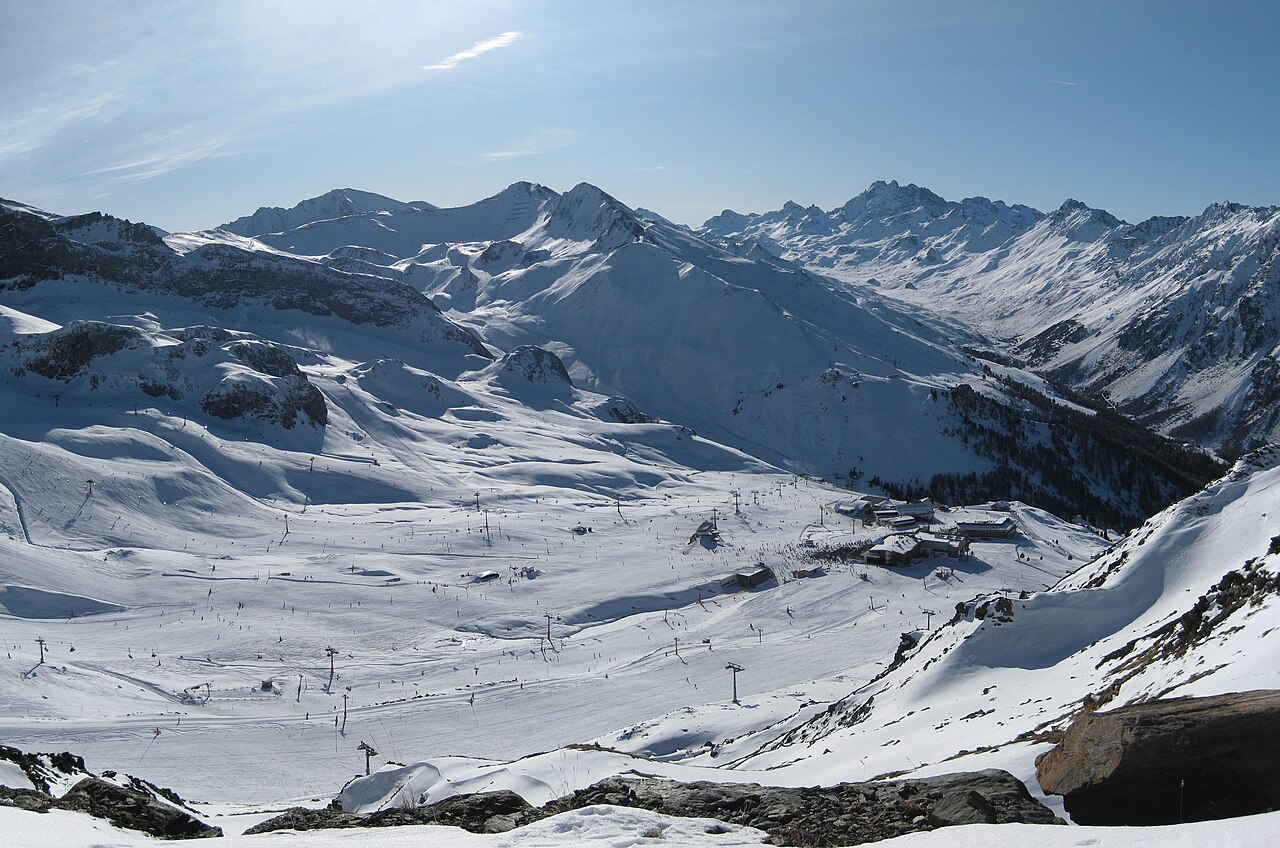
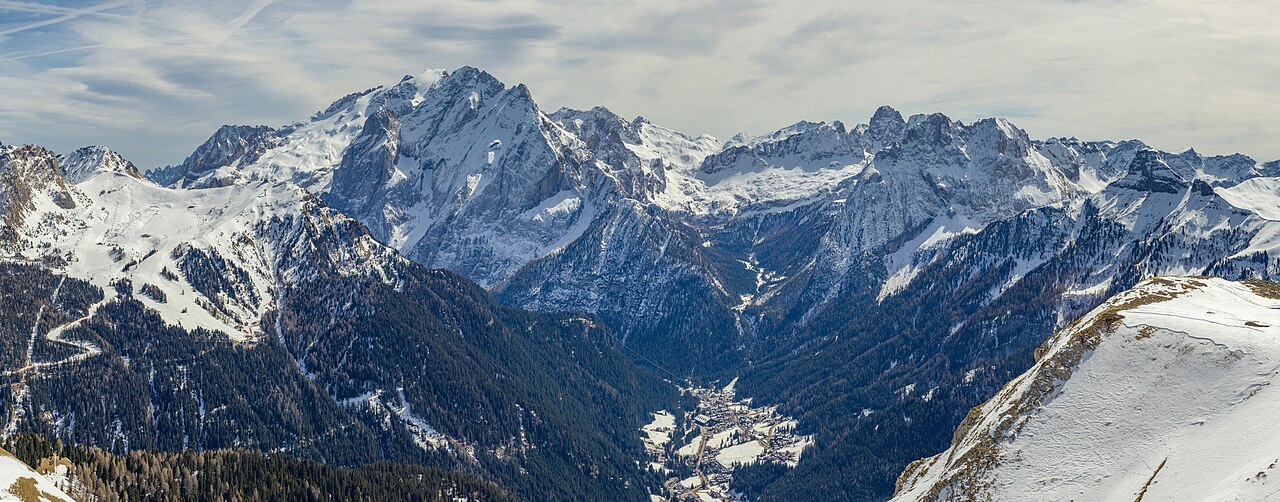
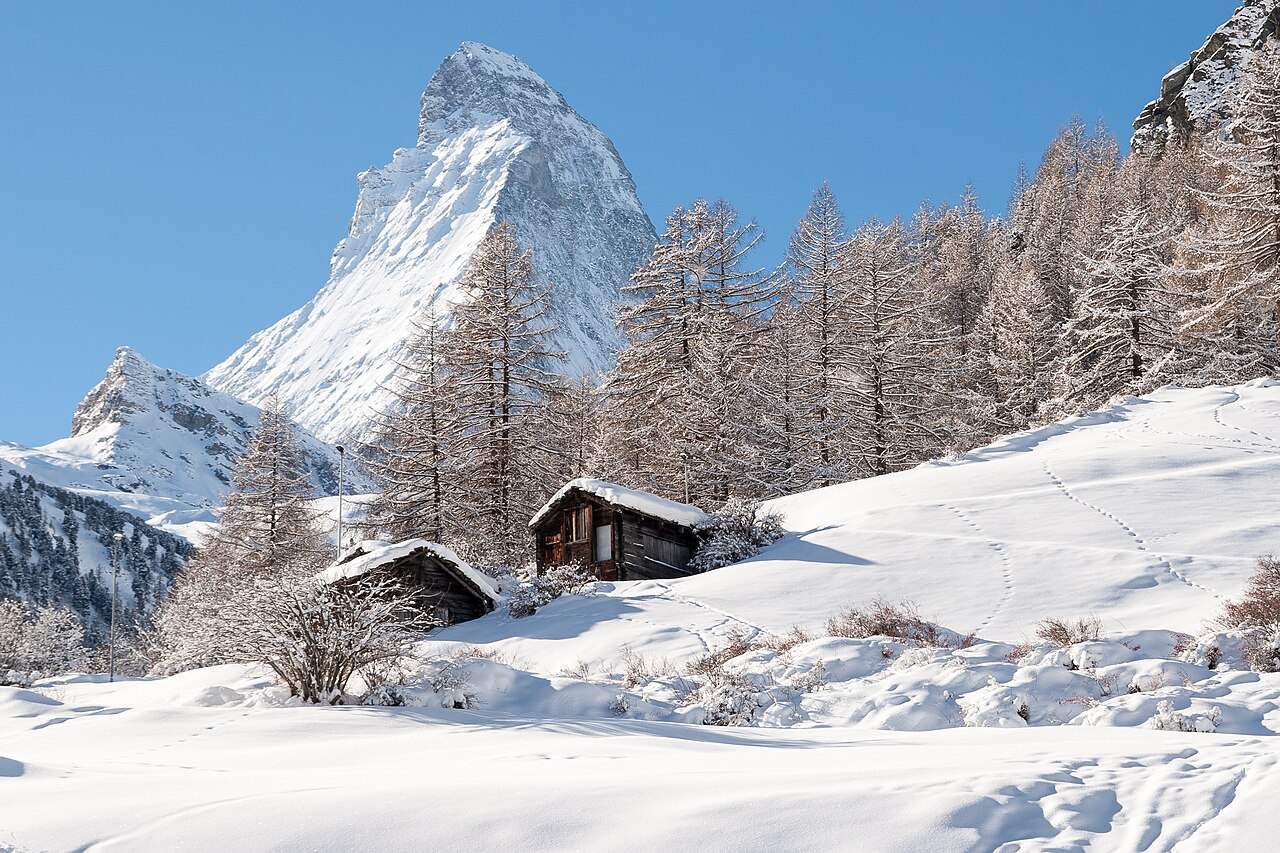
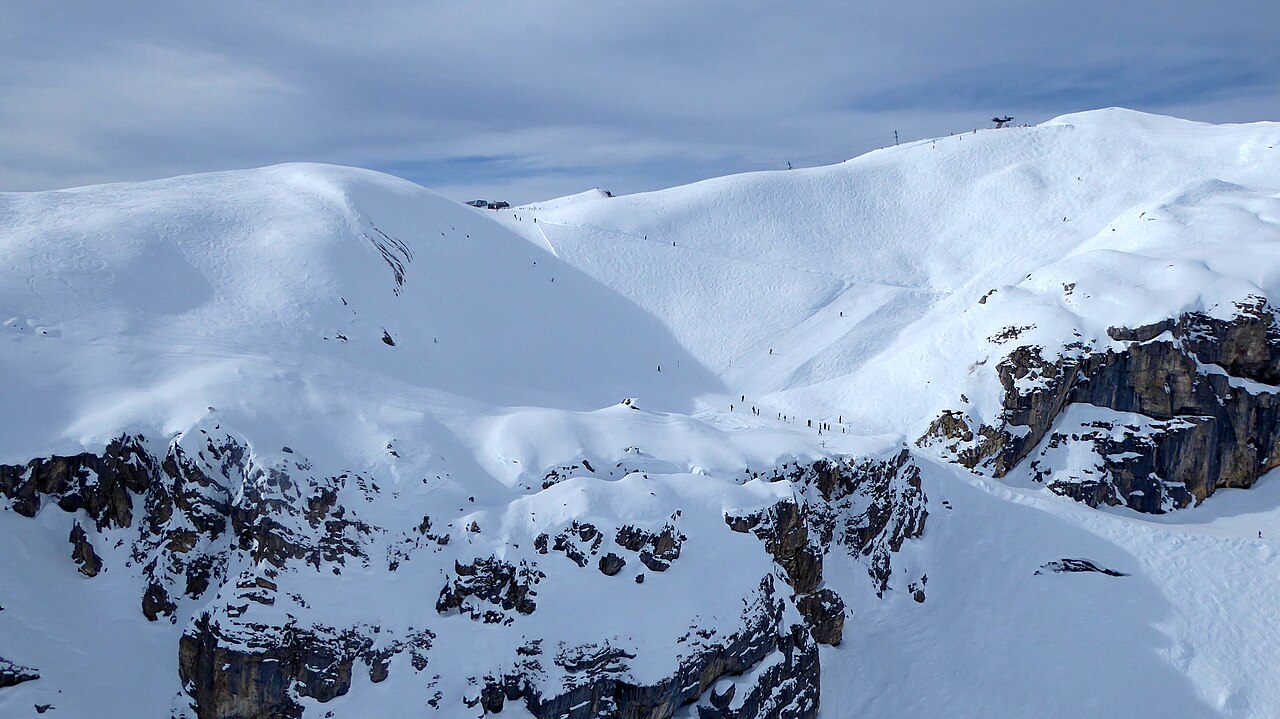
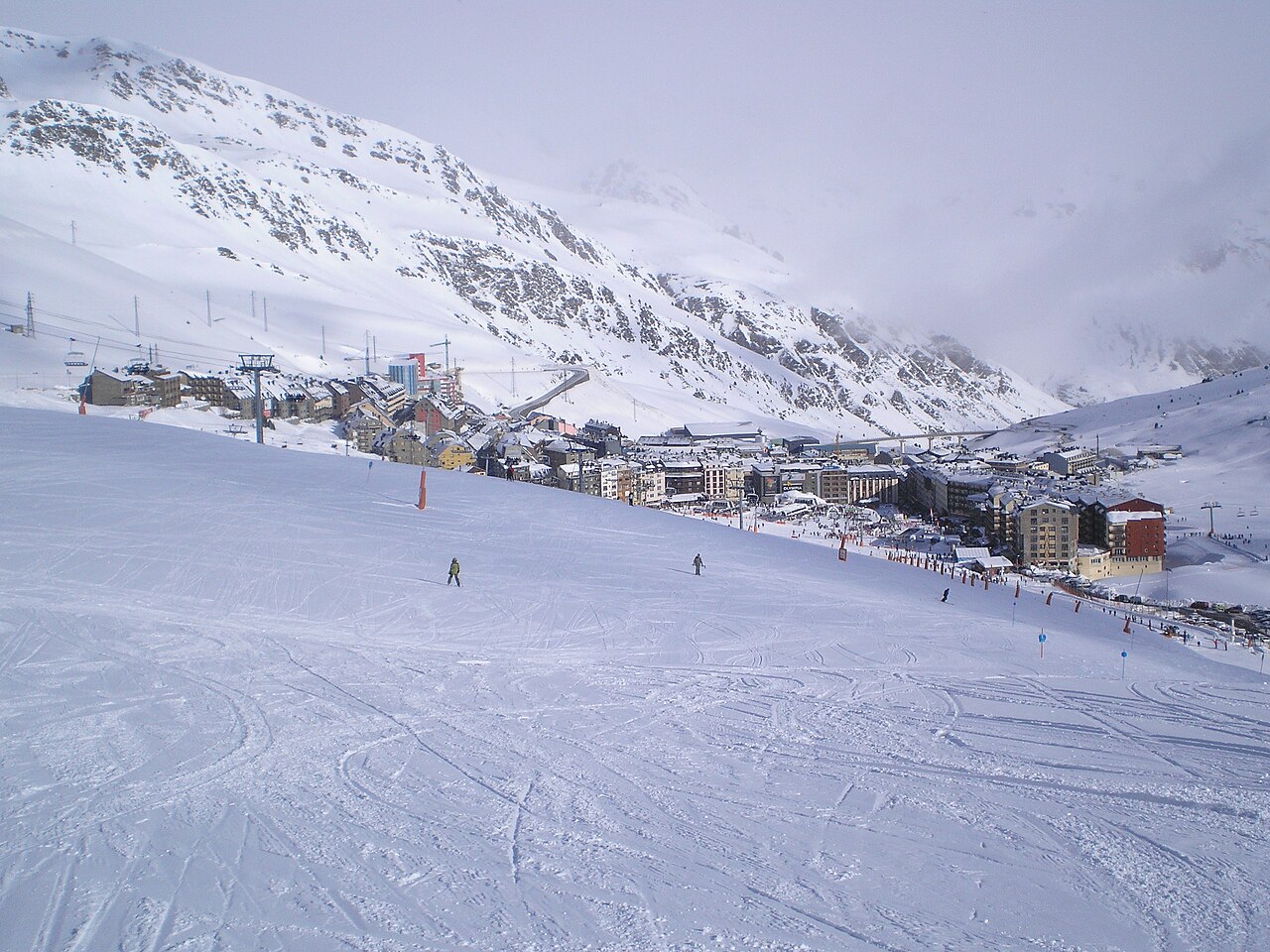
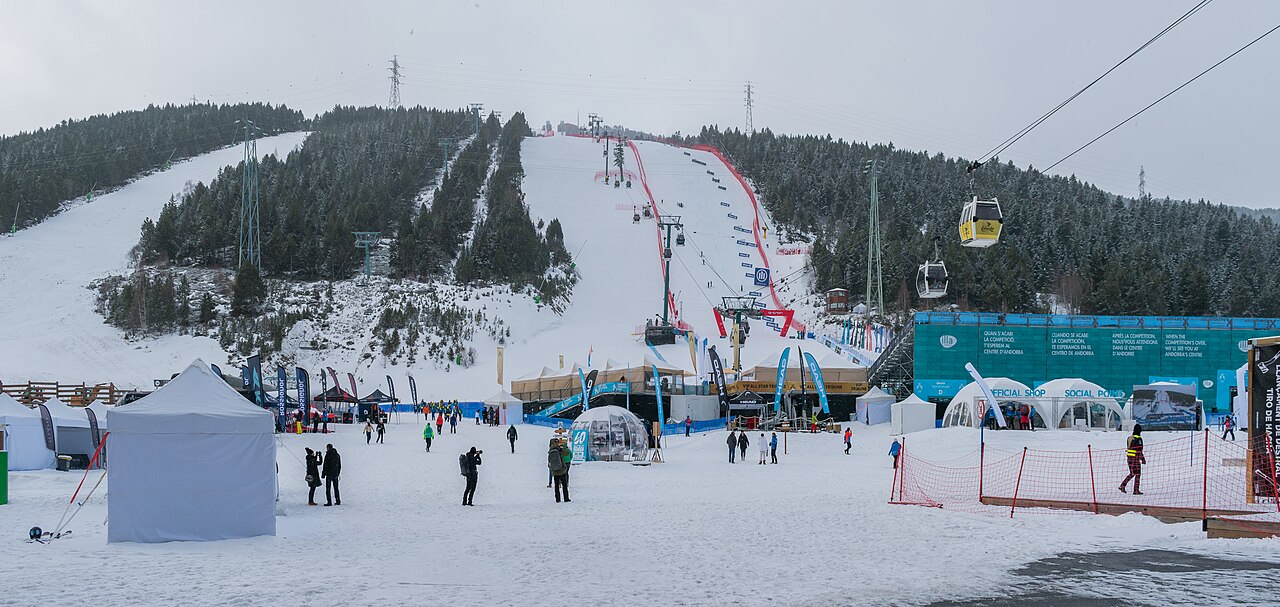
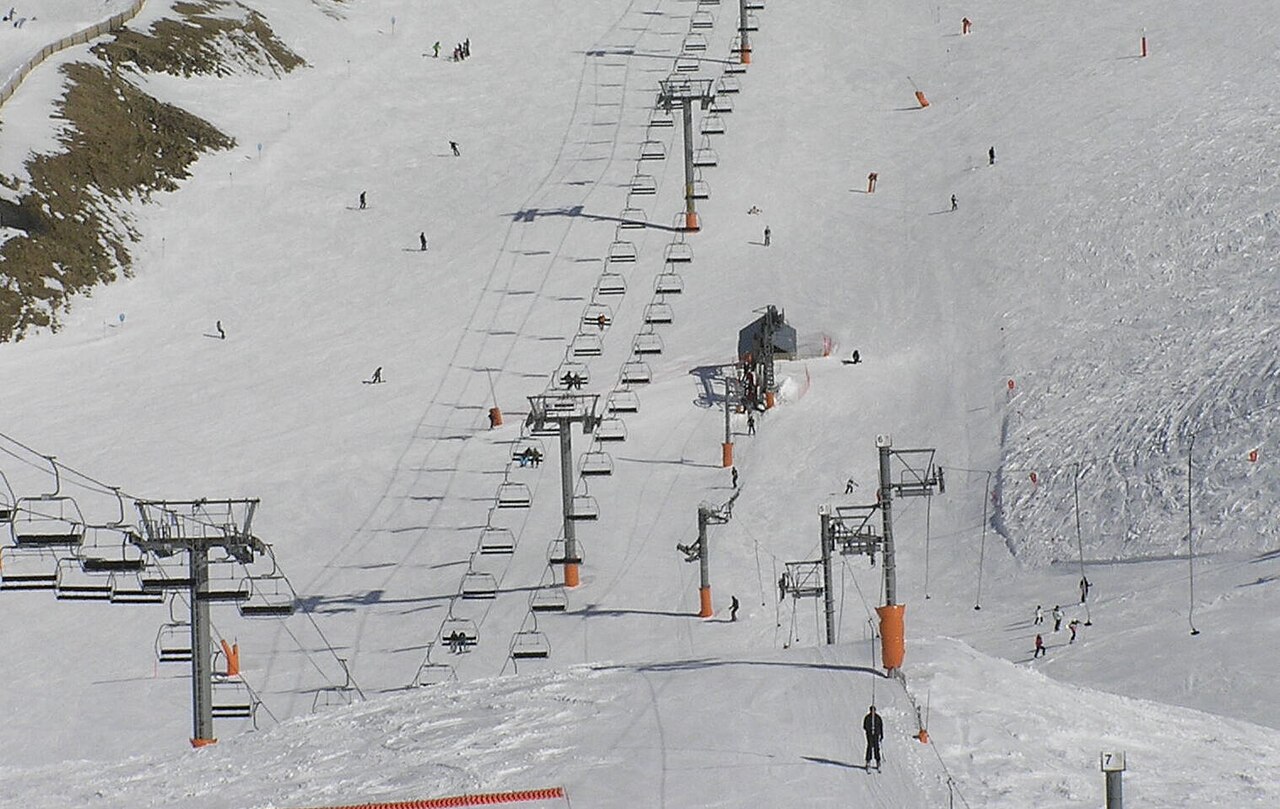
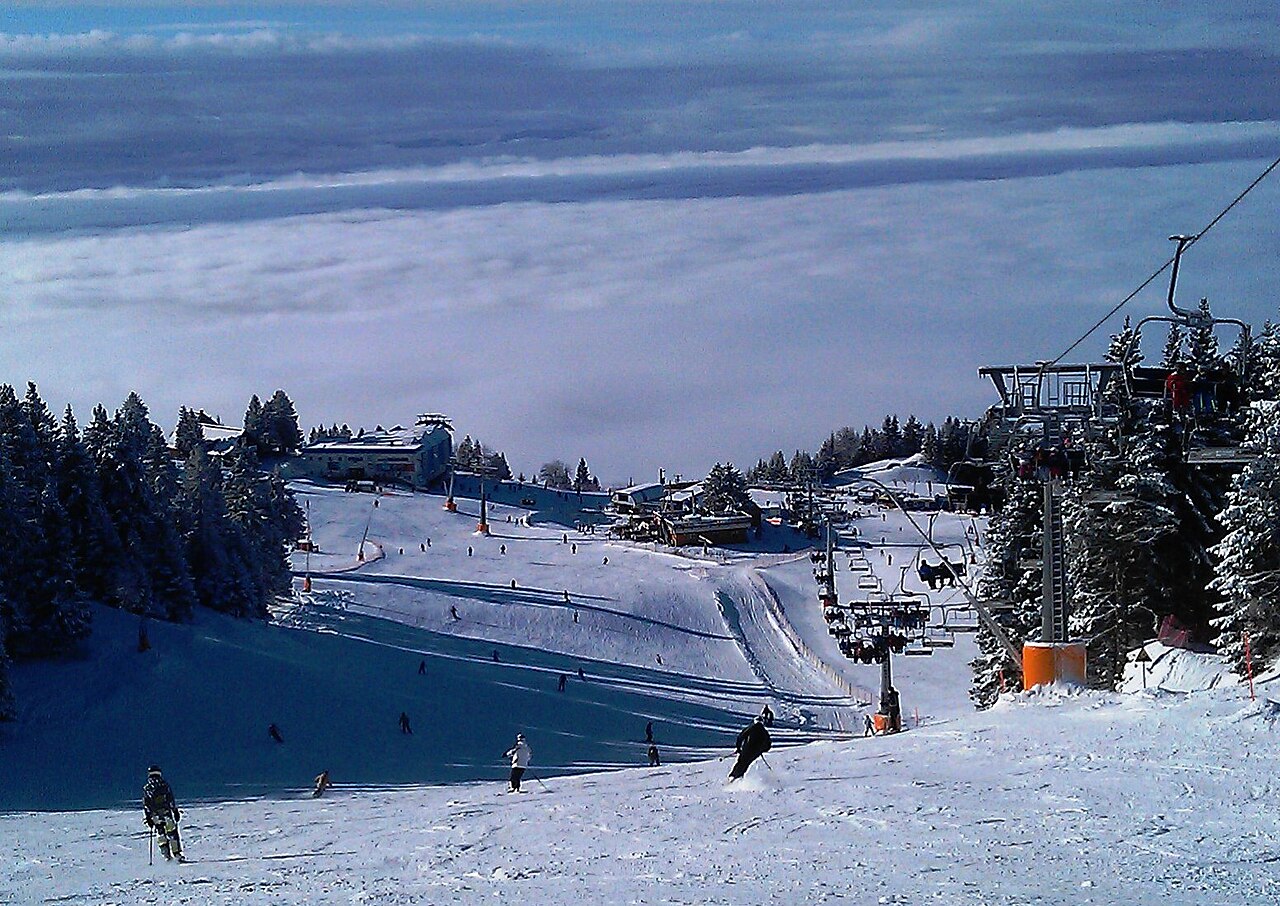
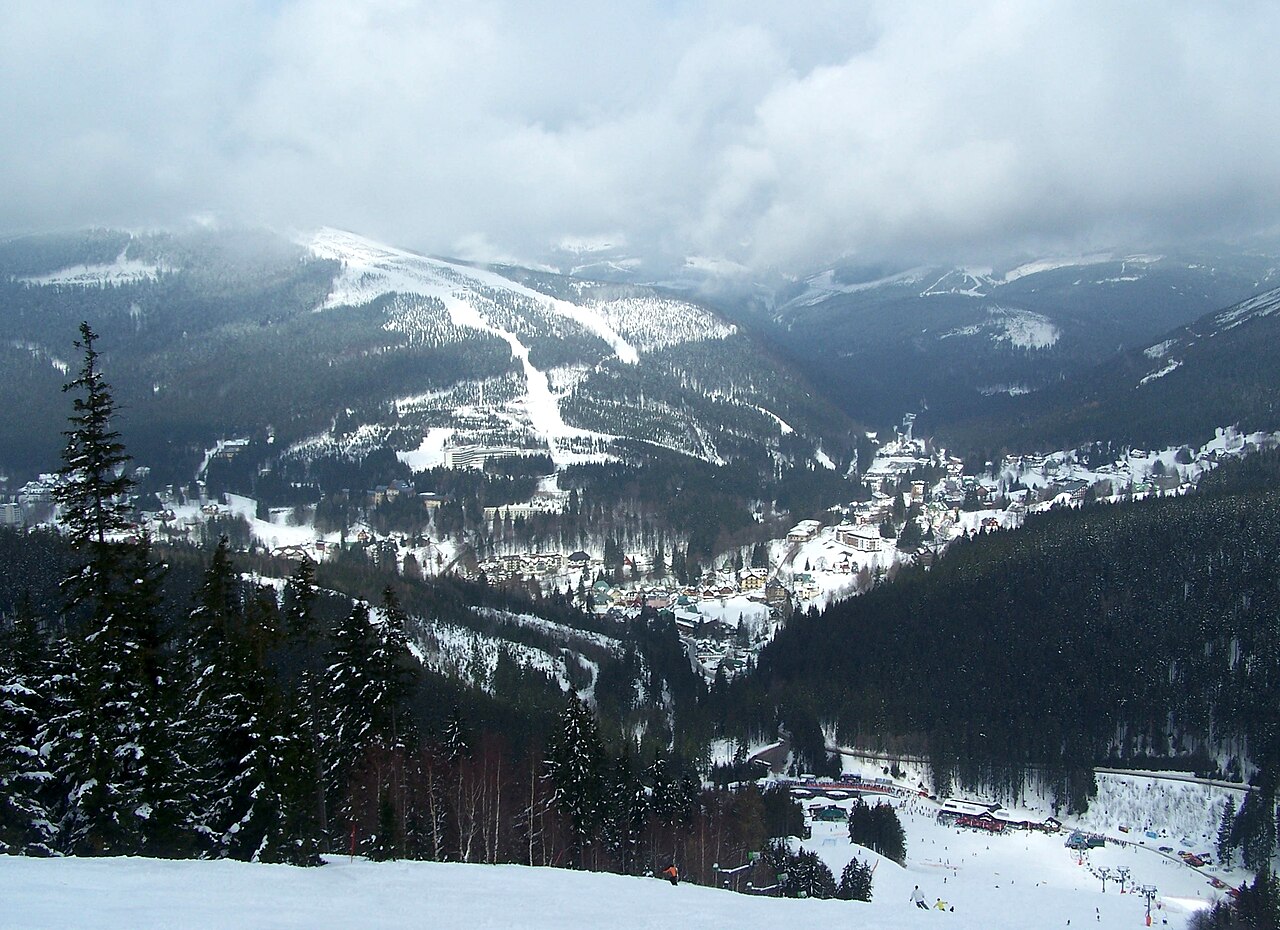
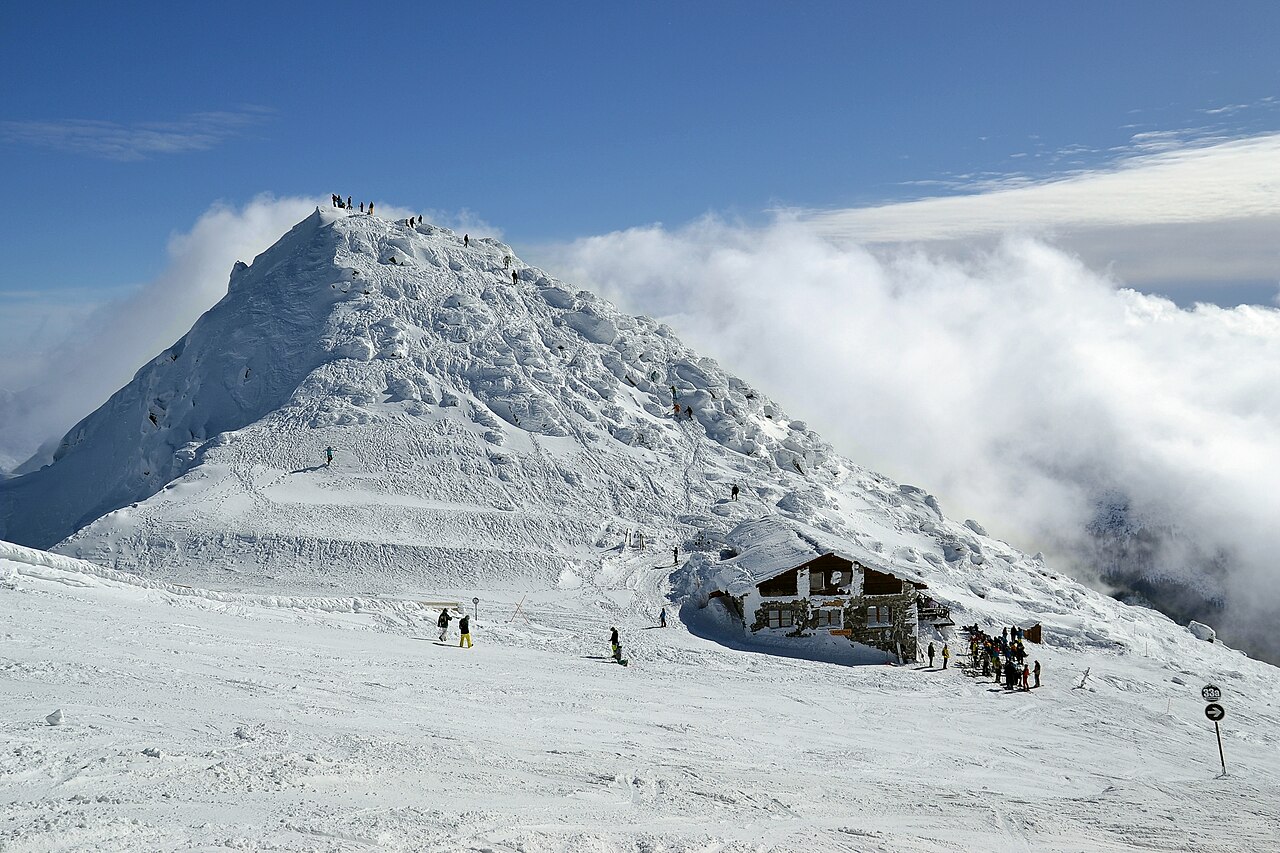
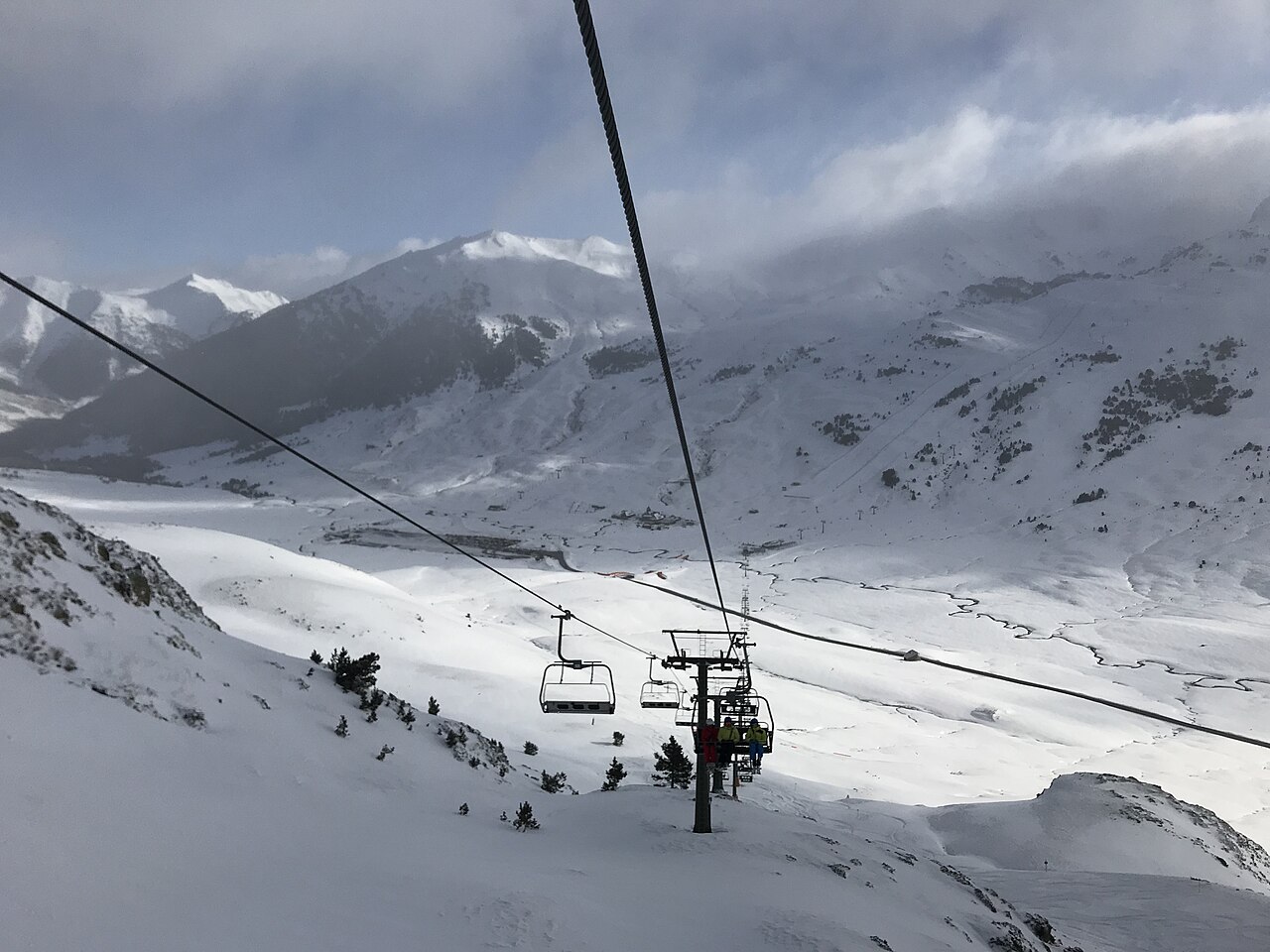
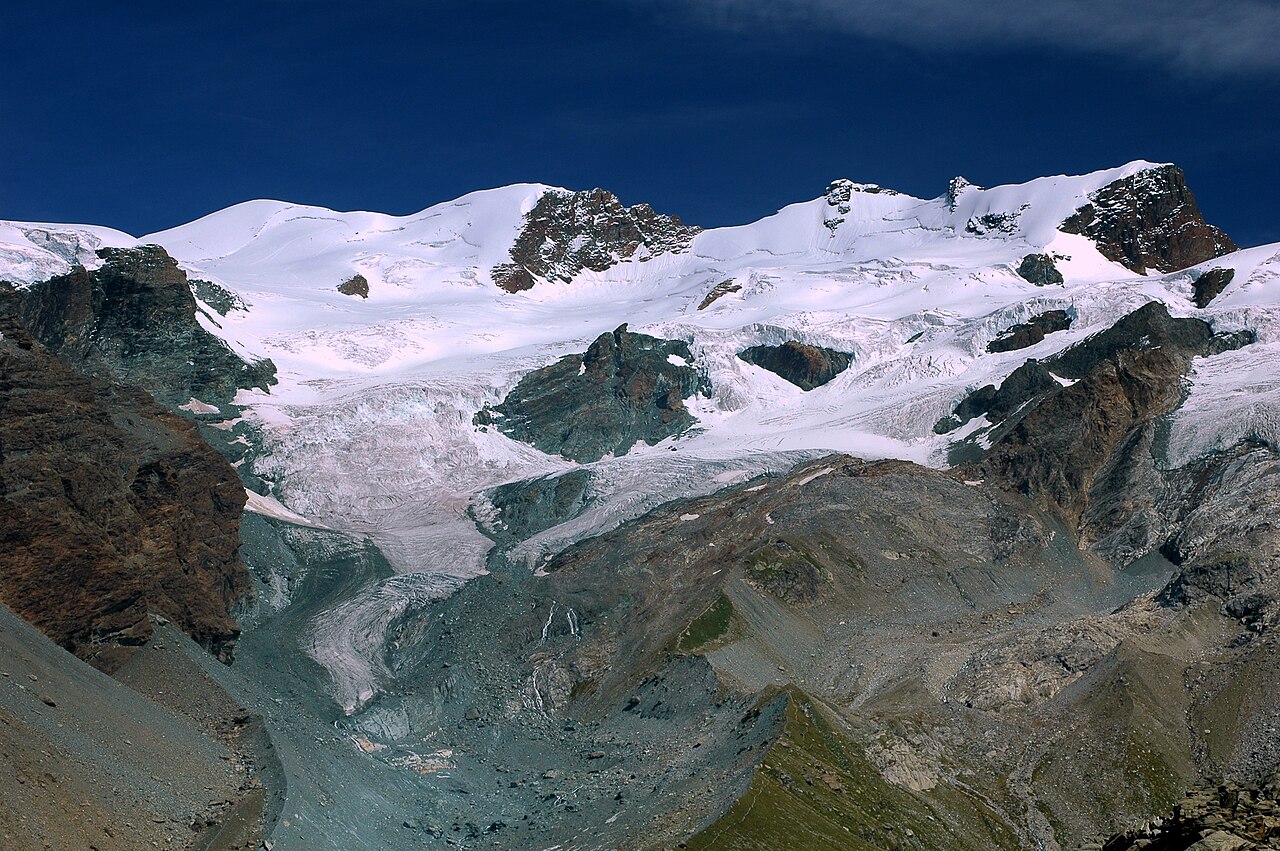
Les Deux Alpes (Les 2 Alpes) is a long resort village at 1650 m with a ski area that climbs to 3600 m on the glacier, so most of the skiing sits above 2000 m and the lift company keeps the top open into early July. Pick a base by the sector you will ski first – the Jandri cable car in the centre, Diable to the south, Belle Étoile and 1800 to the north, or the Venosc gondola from the valley – then check which lower runs are open before you plan to ski home.
A week in Tignes can start on a free beginner lift or take you across to Val d’Isère. Choose your village, lesson meeting point and ski area together, then find people travelling on your dates.
Start with the area you will actually ski. A first lesson in Val Thorens and a day exploring the Three Valleys need different passes, meeting points and plans.
Alpe d’Huez sits on a sunny plateau at 1,860 m and anchors a 250 km ski area that also links Oz, Vaujany, Auris and Villard-Reculas. Pic Blanc at 3,330 m is the start of the 16 km Sarenne and the Tunnel; beginners have free lifts in the resort. Choose a base by the snow front you want each morning, then check whether the full pass or a sector pass fits.
Les Arcs strings Arc 1600, 1800, 1950 and 2000 above Bourg-Saint-Maurice, with Peisey-Vallandry and Villaroger on the same lift-linked area and La Plagne one cable car away. Choose your Arc by how you will arrive and what you want to ski, then decide whether a Classic pass is enough or the Vanoise Express calls for Paradiski.
La Plagne is a cluster of purpose-built high villages and older lower ones, linked by one ski area and by the Vanoise Express to Les Arcs. Where you sleep decides your first lift, your lesson meeting point and how early in the season the snow at your door is reliable. Choose that, then decide whether you need Paradiski.
In Chamonix, the valley name is not a single lift base. Match your level, school and accommodation to the area you want to ski, and plan the bus or rail connection for other days. A town-centre stay and a lesson in Le Tour can mean different morning journeys.
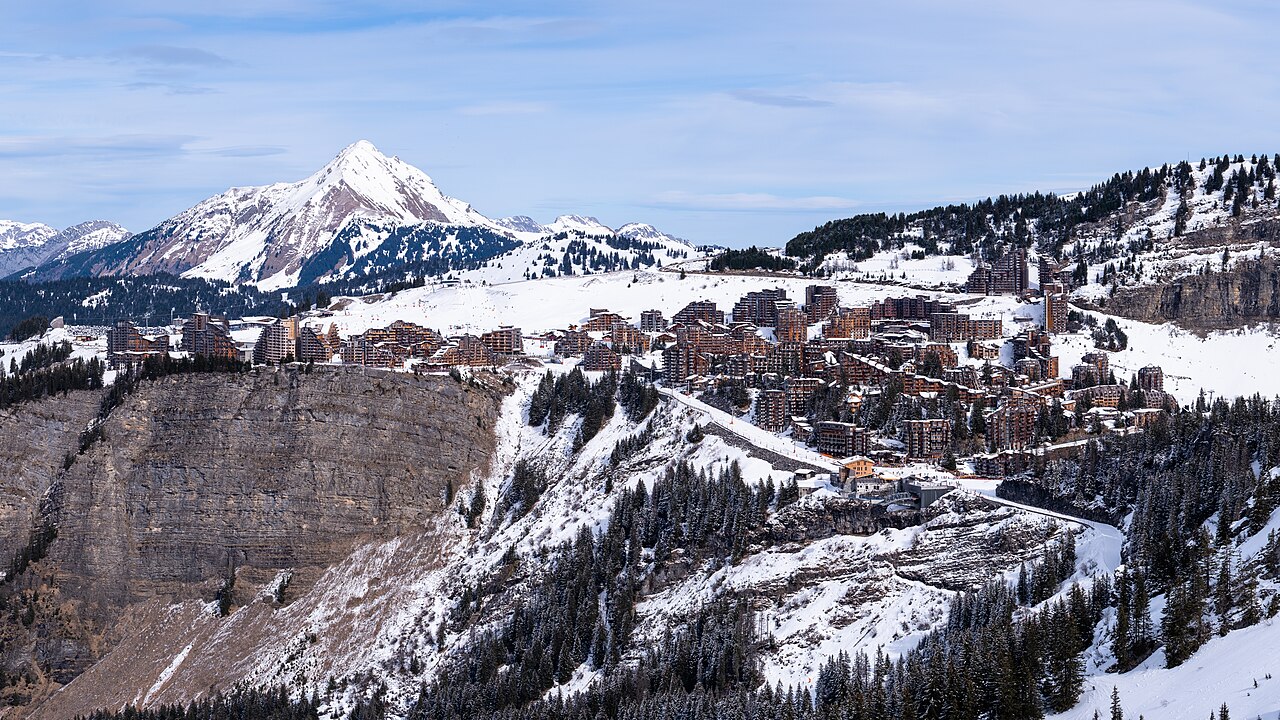
Avoriaz is a car-free resort at 1,800 m above Morzine, where you ski to and from your door through snow-covered streets. Its own 54 runs spread from the Hauts-Forts blacks to the forest blues of Les Lindarets, and the Portes du Soleil pass links 12 resorts across France and Switzerland, including the Swiss Wall.
La Clusaz is a lived-in Aravis village at about 1,040 m, an hour from Geneva, with skiing on five massifs up to 2,600 m. Its single La Clusaz-Manigod pass covers 85 official runs, from the beginner plateau at Beauregard to the high Balme bowl where Candide Thovex learned to ski, and the low village makes the timing of your trip matter.
Serre Chevalier strings four bases along the Guisane valley — Briançon, Chantemerle, Villeneuve and Le Monêtier-les-Bains — under one 250 km ski area of 82 runs. Pick your village by the gondola, beginner area and bus you will use, and come for February or early March if you want the best odds of deep snow.
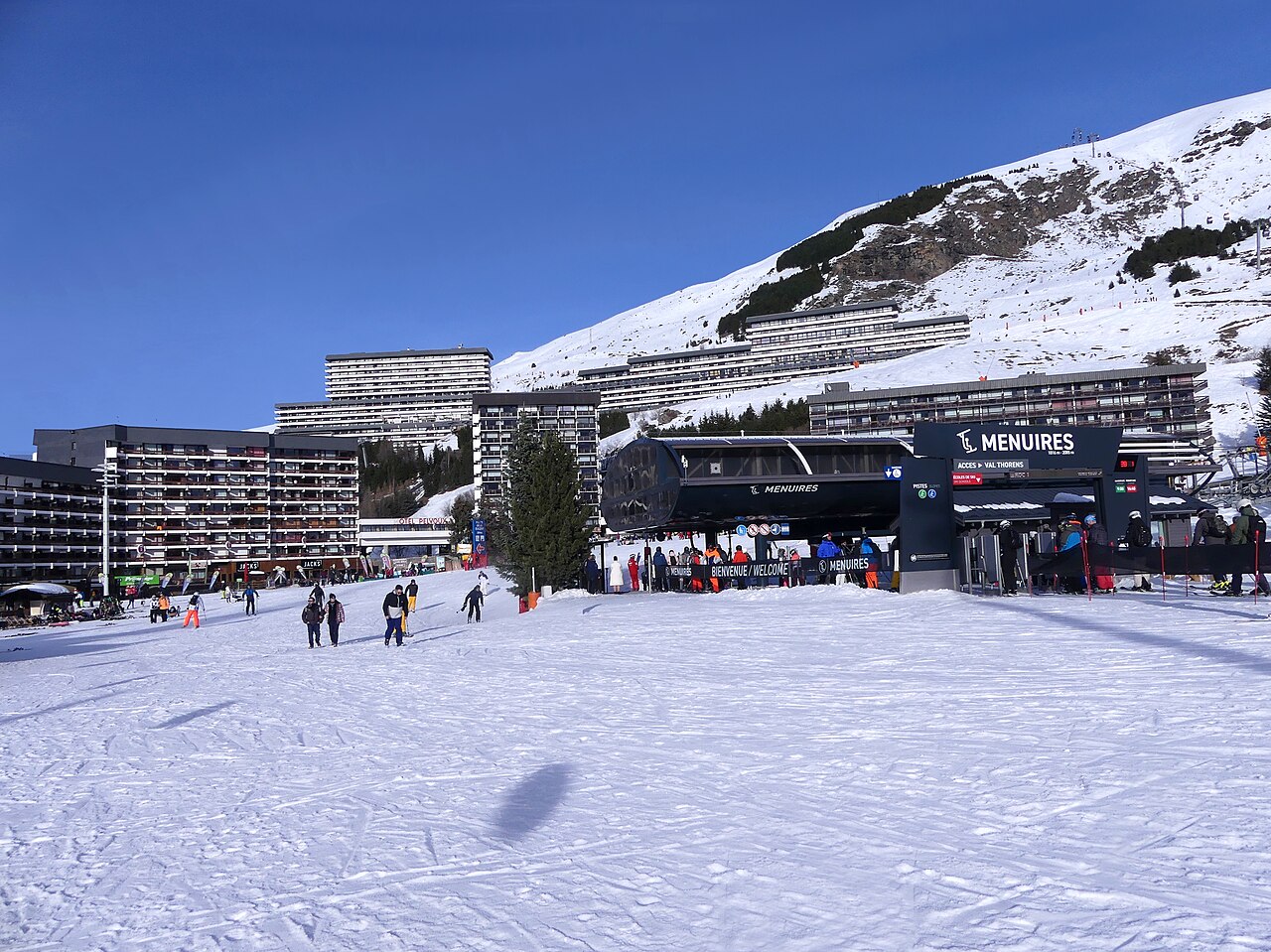
Les Menuires sits at 1,850 m in the Belleville valley, between Saint-Martin-de-Belleville below and Val Thorens above. Its own 81 slopes run from free beginner carpets to the blacks of La Masse, and the 3 Vallées pass opens the rest of the world's largest linked area.
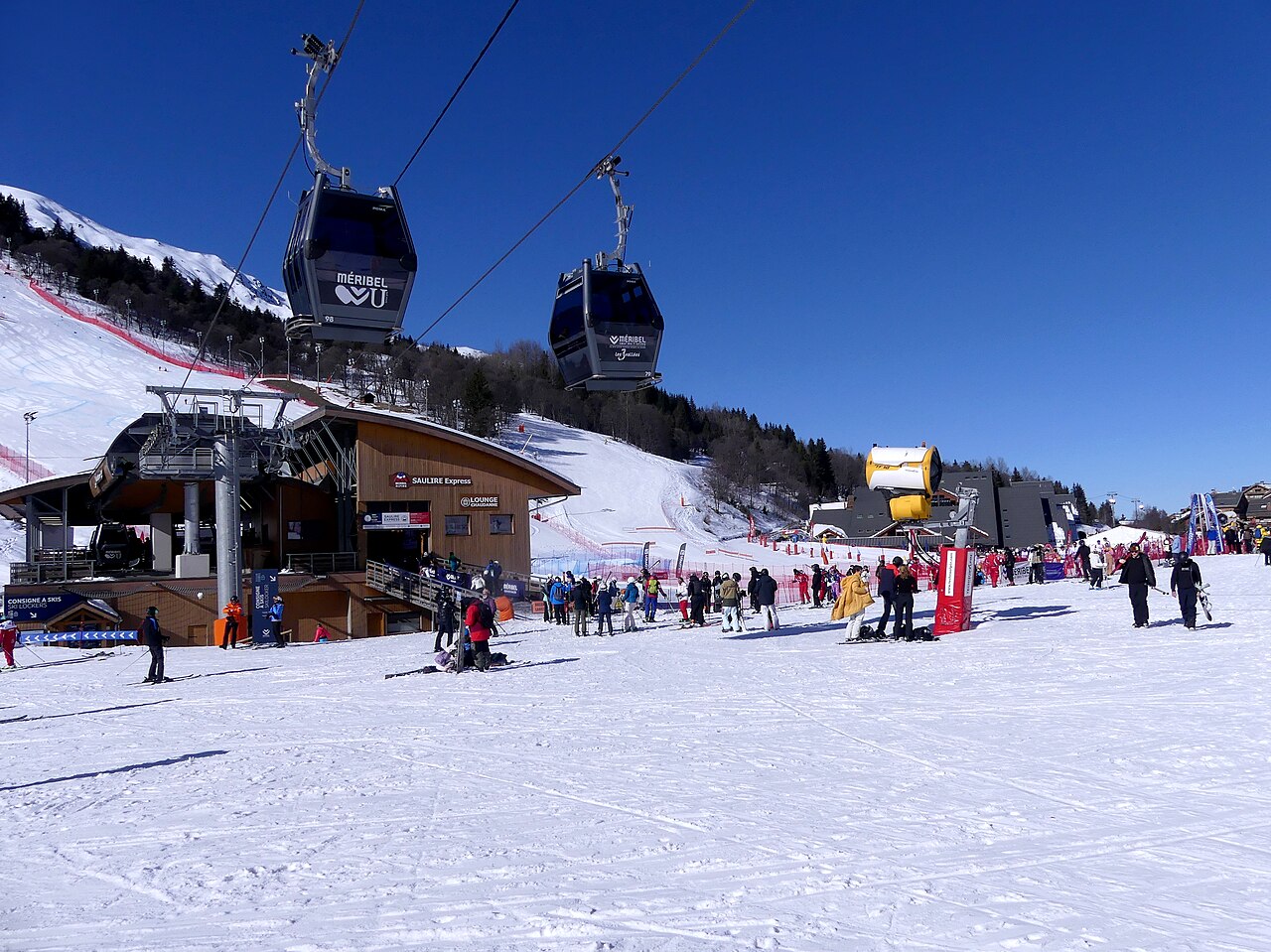
Méribel fills the Allues valley in the middle of Les 3 Vallées, from Méribel Centre at 1,450 m and Mottaret at 1,750 m up to the Mont Vallon gondola at 2,910 m. Its own 77 slopes range from the forest greens around the Altiport to the Roc de Fer, where the 2023 World Championships women's downhill was raced, and a 3 Vallées pass opens Courchevel, Les Menuires and Val Thorens on either side.
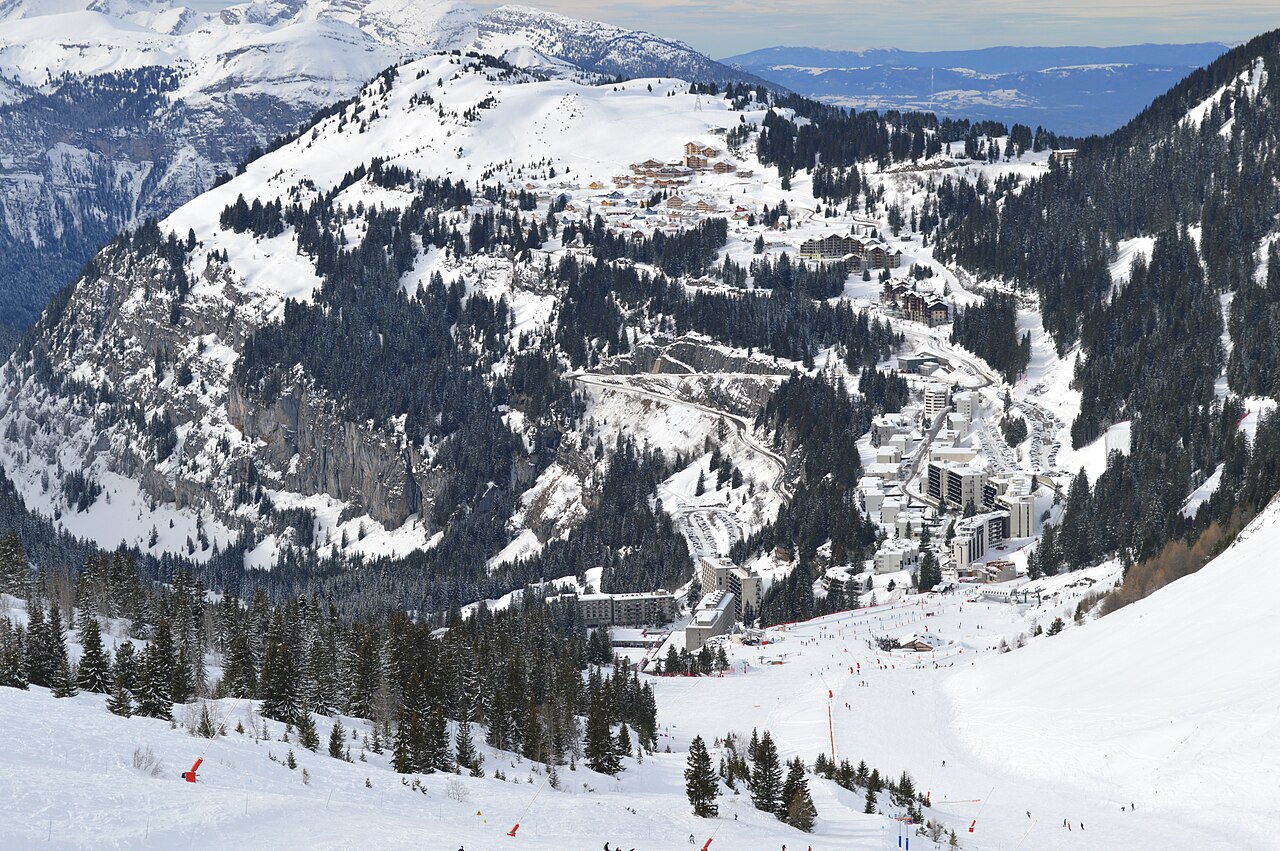
Flaine is the highest resort of the Grand Massif: a car-free, purpose-built village between about 1,500 m and 1,800 m, with its own ski area climbing to 2,500 m at the Grandes Platières. Its runs range from beginner greens at the snow front to the ungroomed Combe de Gers, and a Grand Massif pass links it with Les Carroz, Morillon, Samoëns and Sixt — including the 14 km Cascades run down to Sixt.
Val d’Isère spreads along the upper Isère from La Daille to Le Fornet, with Bellevarde and Solaise above the village and the Pissaillas glacier at the head of the valley. Choose your hamlet by the lifts and shuttles you will use, then decide whether the 150 km Val d’Isère pass is enough or the link to Tignes is worth the 300 km pass.
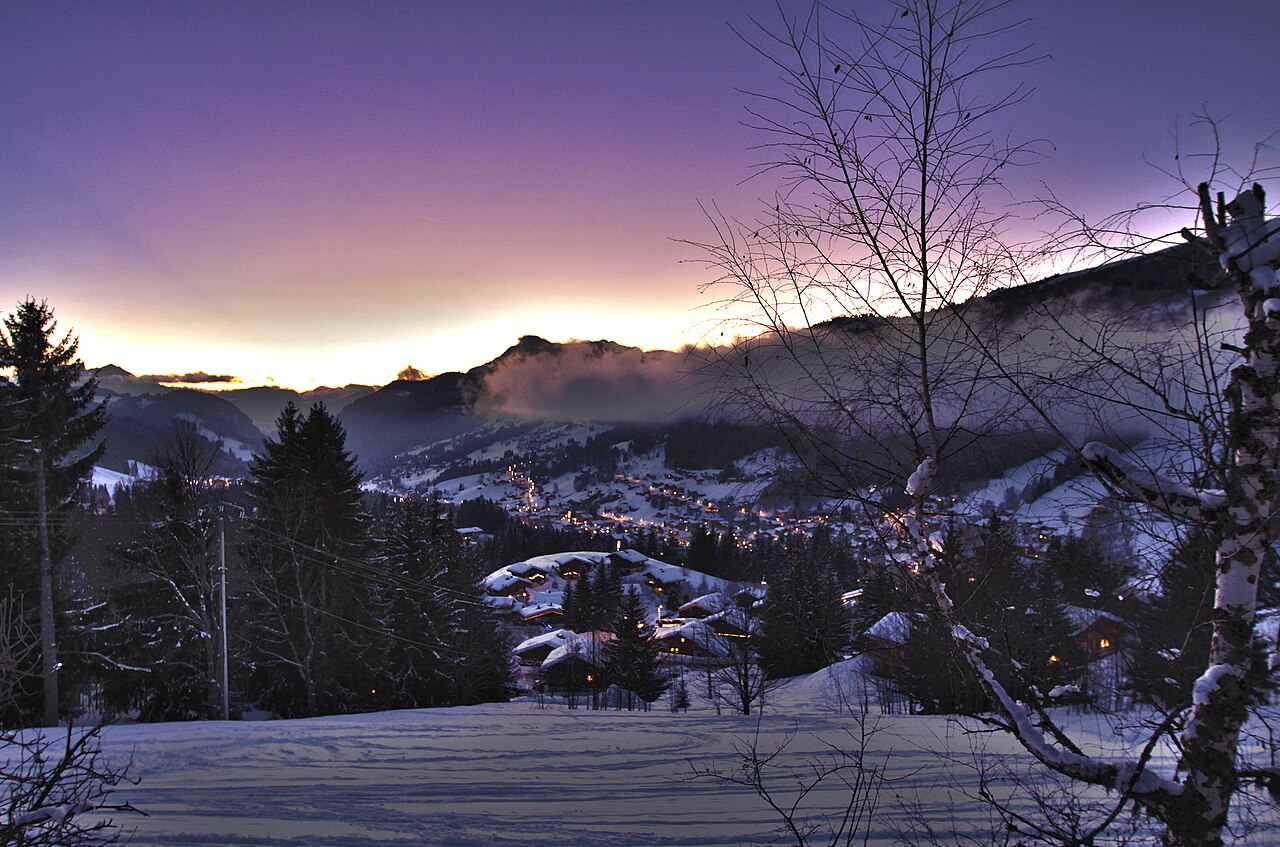
Les Gets and Morzine share a 120 km ski area in four sectors — Les Chavannes and Mont Chéry above Les Gets, Pleney and Nyon above Morzine — topping out at Pointe de Nyon (2,019 m). Les Gets is the family village with its beginner plateau and Espace Grand Cry, Morzine the bigger town with lifts into both this area and Avoriaz, and a Portes du Soleil pass stretches the day to 650 km across France and Switzerland.
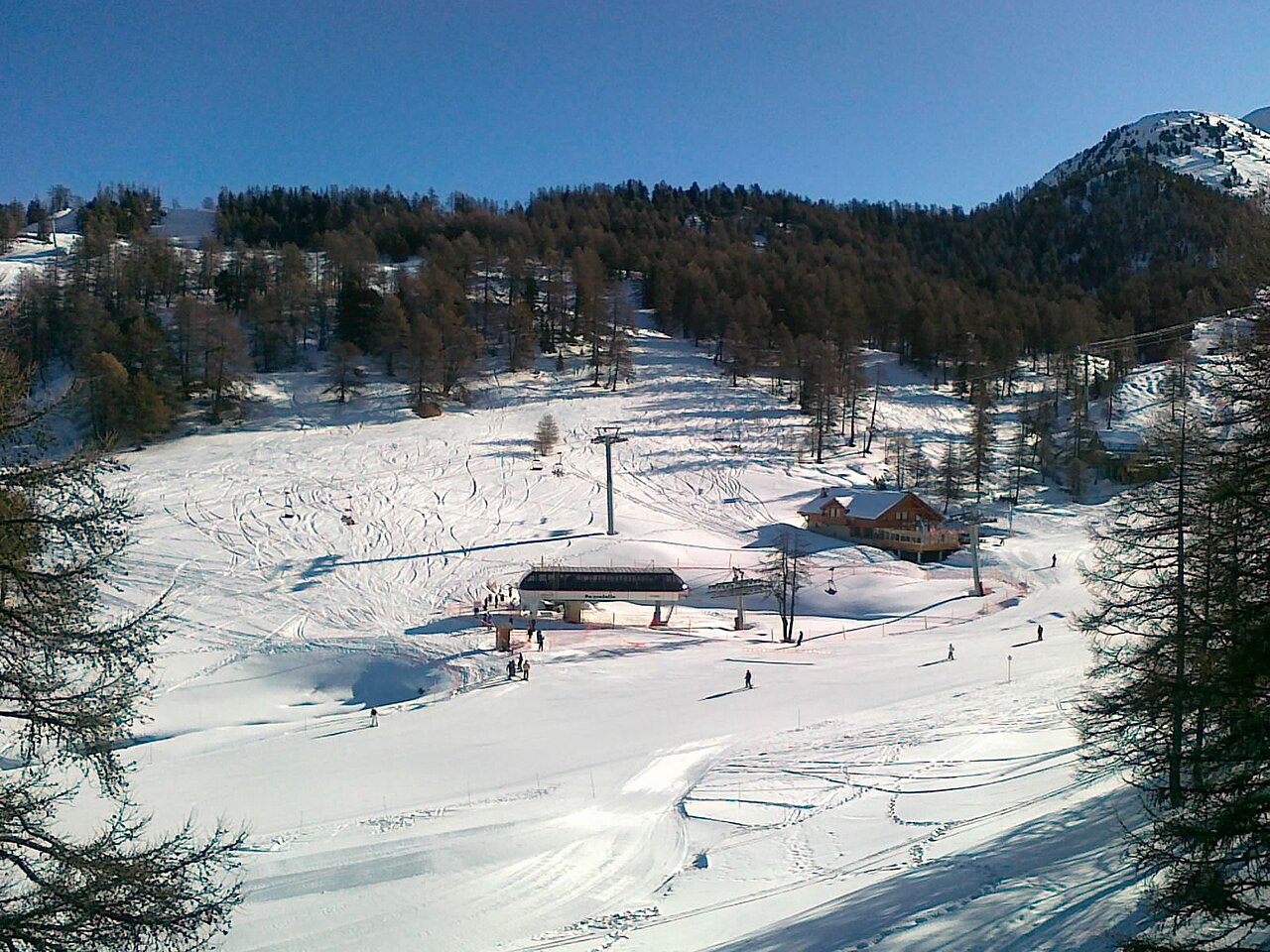
Risoul and Vars, in the Hautes-Alpes, are linked on skis as La Forêt Blanche, with 185 km of pistes up to 2750 m at Chabrières. Each resort runs its own lifts and live piste list, so this guide labels every run by the resort and sector its operator gives it, then helps you choose a base and a gateway airport.
La Rosière is a south-facing resort in Savoie that connects over the Col du Petit-Saint-Bernard to La Thuile in Italy, forming the Espace San Bernardo. Pick a base by lift and ski bus, then decide whether you need the cross-border pass and how you will get up from Bourg-Saint-Maurice.
Valmorel is the first resort you reach in the Tarentaise, a wood-and-slate village built around a pedestrian street, linked over the Col de la Madeleine to Saint-François-Longchamp. Choose between the Valmorel pass and the Grand Domaine pass, pick a hamlet by its shuttle stop or lift, and plan the last leg up from Moûtiers.
Orcières Merlette 1850 is a high, sunny resort in the Champsaur, Hautes-Alpes, with 52 runs up to 2725 m and a long record as a family resort. Choose between the resort itself and Orcières village 5 km below, then plan the last leg from Gap by Zou! bus or by car.
St. Anton is one base within Ski Arlberg. Plan around your starting point and a realistic return route before treating the whole connected area as one day's itinerary.
Choose whether the day stays around Ischgl or crosses to Samnaun in Switzerland. Match the pass, meeting point and return connection to that choice. The wider Paznaun pass also covers other resorts, which are separate day trips rather than extra runs beside your hotel.
Sölden in Tyrol's Ötztal skis from about 1,350 m to 3,340 m across three linked areas: Gaislachkogl, Giggijoch and the Rettenbach and Tiefenbach glaciers. Glacier skiing starts in early October and the World Cup opens there in late October; the whole area runs from mid-November to mid-April. Pick your base by the gondola you will use most.
Kitzbühel is a Tyrolean town at about 770 m with its ski area on two sides: the Hahnenkamm, home of the Streif, linked through Kirchberg and Jochberg to the Resterhöhe at Pass Thurn, and the sunny Kitzbüheler Horn across the valley. The town is low, so snow up high is far better than in the streets — plan around the upper lifts and check the snow line.
Start with the mountain that fits your group. Ahorn’s learning plateau and its black valley return are very different experiences; Penken offers a wider sporting circuit. Choose a lesson base and a way down before treating either mountain as one difficulty level.
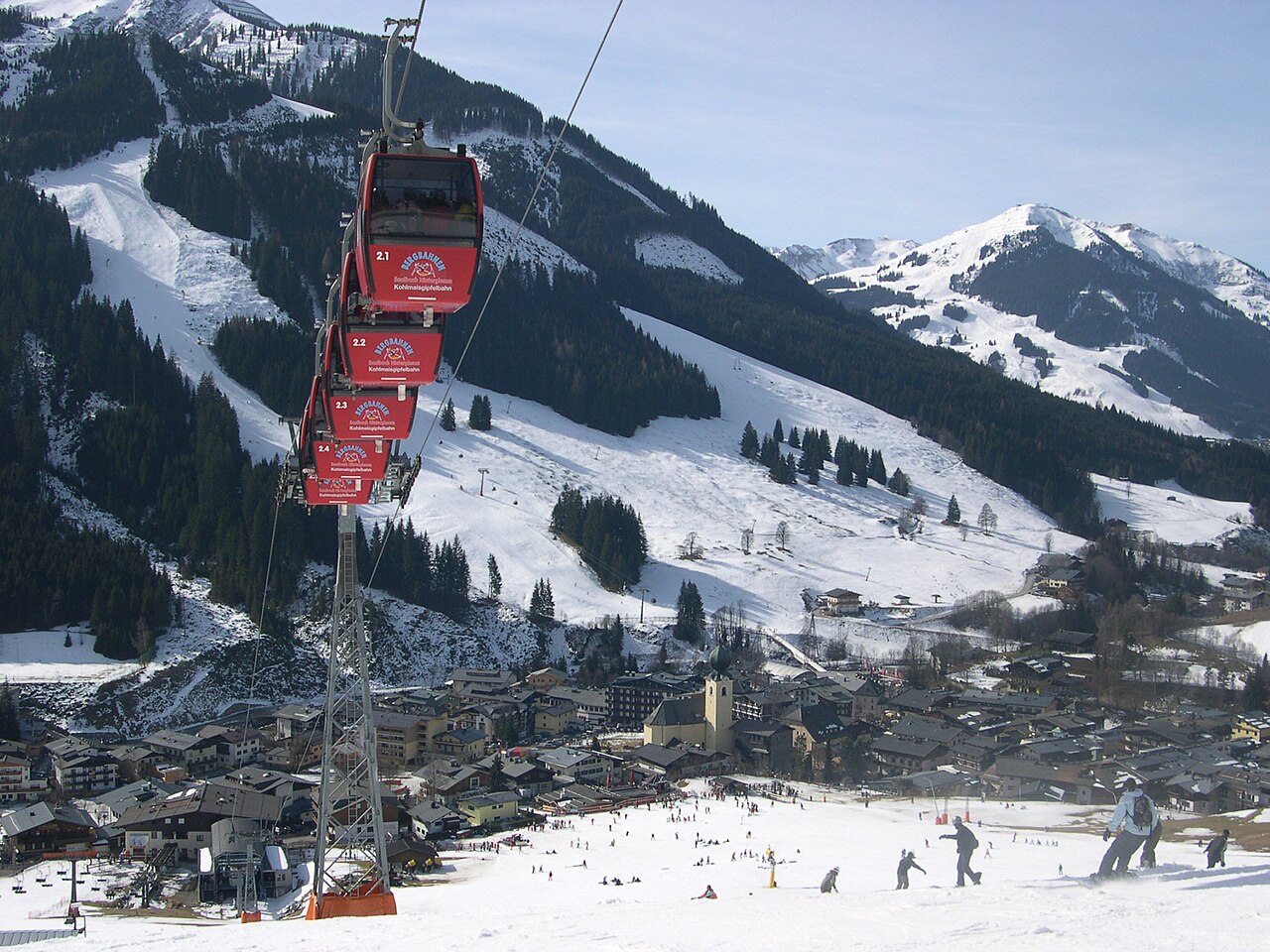
Saalbach and Hinterglemm share the Glemm valley in Salzburg and sit at the heart of the Skicircus, which links them by lift with Leogang and, over the Tyrol border, Fieberbrunn: 270 km of slopes and 70 lifts. The 2025 World Championships were raced on Hinterglemm's Zwölferkogel, and the 2026–27 season runs from 27 November to 4 April. Choose your base by the gondola you will ride first each morning.
Obertauern sits at 1,740 m on the Radstädter Tauern pass in Salzburg, with 26 lifts and about 100 km of slopes in a ring around the village, so most hotels are ski-in/ski-out. Ski the Tauernrunde clockwise on the red signs or anti-clockwise on the green ones, and save the steep Gamsleiten 2 for a good day. The 2026–27 season is expected to run from 20 November to 2 May.
Zell am See-Kaprun pairs the sunny Schmittenhöhe, rising straight from the lake town, with the Kitzsteinhorn glacier above Kaprun, which opens in October. They are separate ski areas joined by bus line 660 and one pass that also covers Saalbach. Choose your base by the mountain you will ski most.
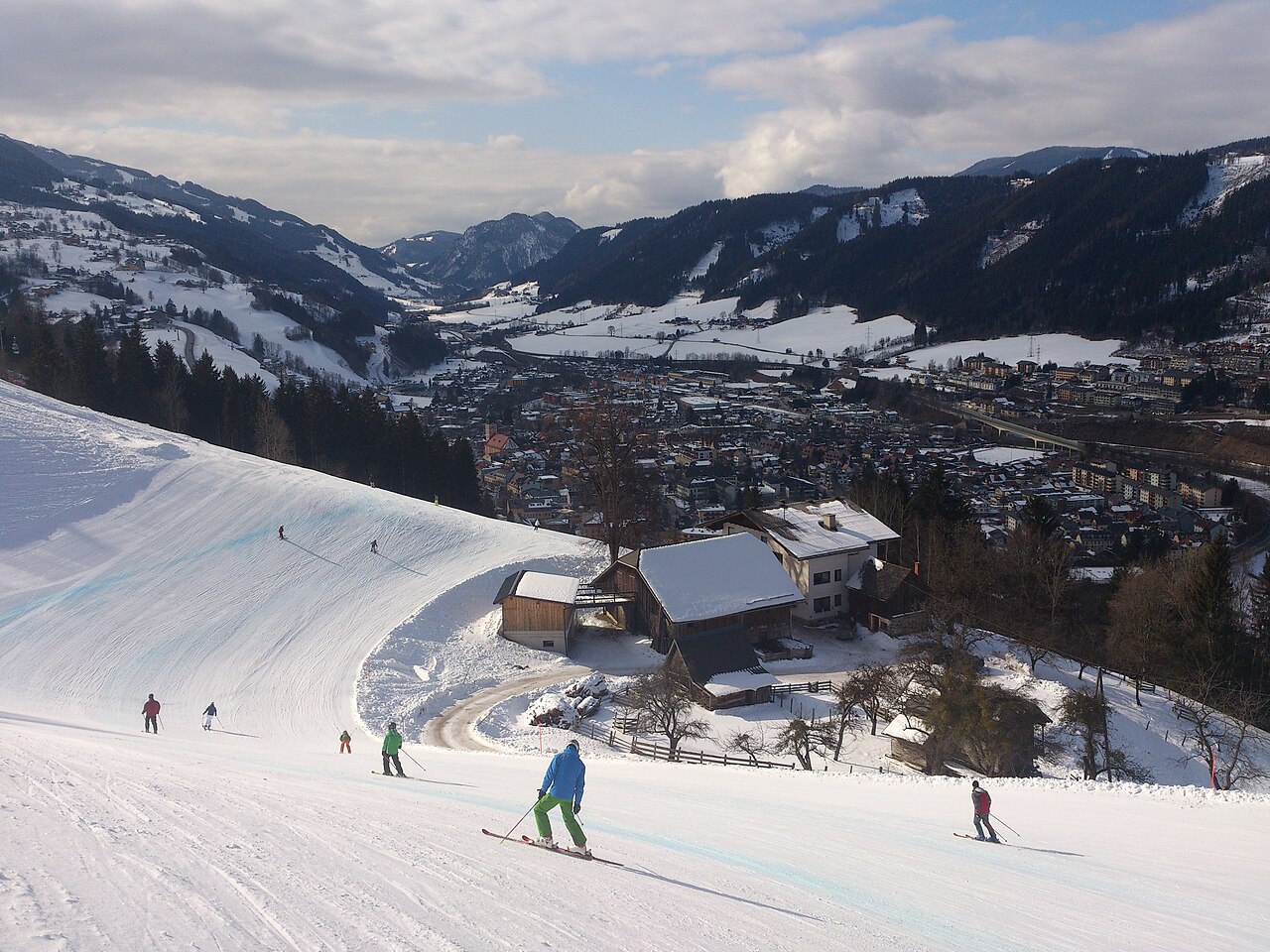
Schladming is a Styrian town at about 750 m whose 4-mountain ski link joins Hauser Kaibling, Planai, Hochwurzen and Reiteralm — 123 km of pistes on one pass, part of Ski amadé. You can step off the train and walk to the Planai West cable car, but the town is low, so the snow up high matters more than the snow in the streets.
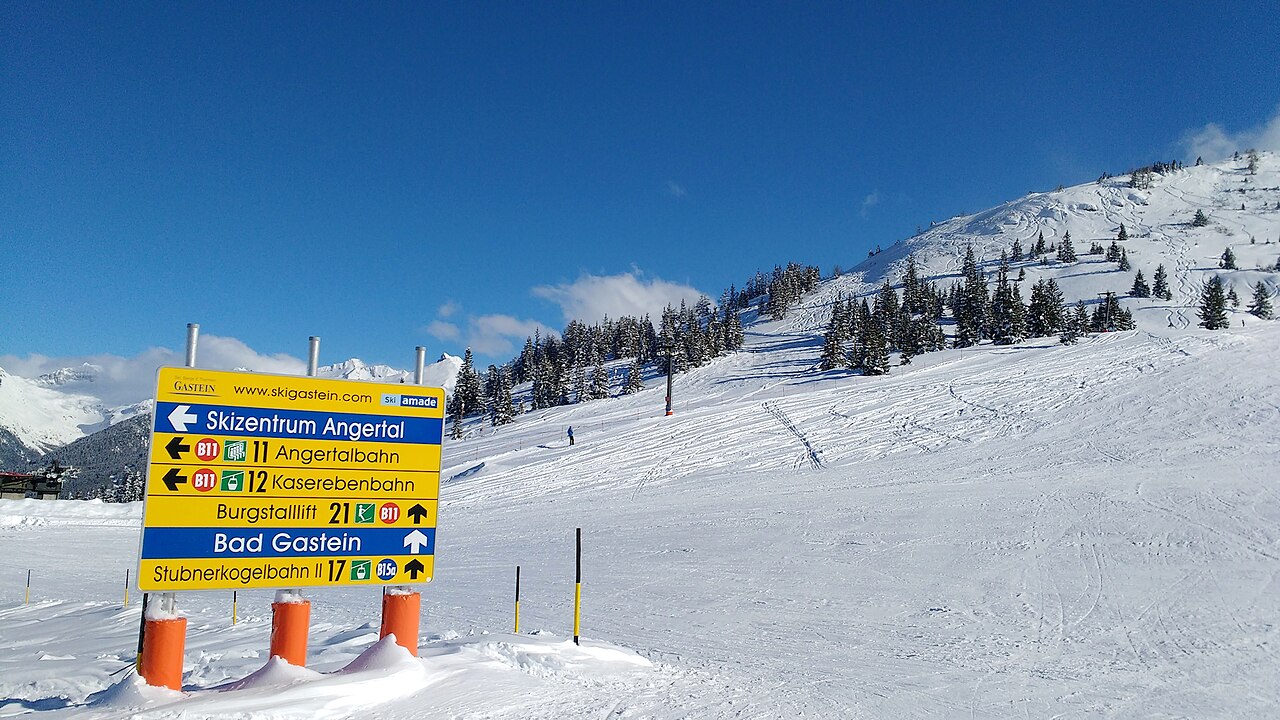
Bad Gastein is the Belle Époque spa town at the head of the Gastein valley in Salzburg, and its ski pass covers three areas: the linked Schlossalm-Angertal-Stubnerkogel above Bad Hofgastein and Bad Gastein, high Sportgastein, and Dorfgastein-Großarl. Trains stop next to the Stubnerkogel gondola, and free ski buses tie the valley together.
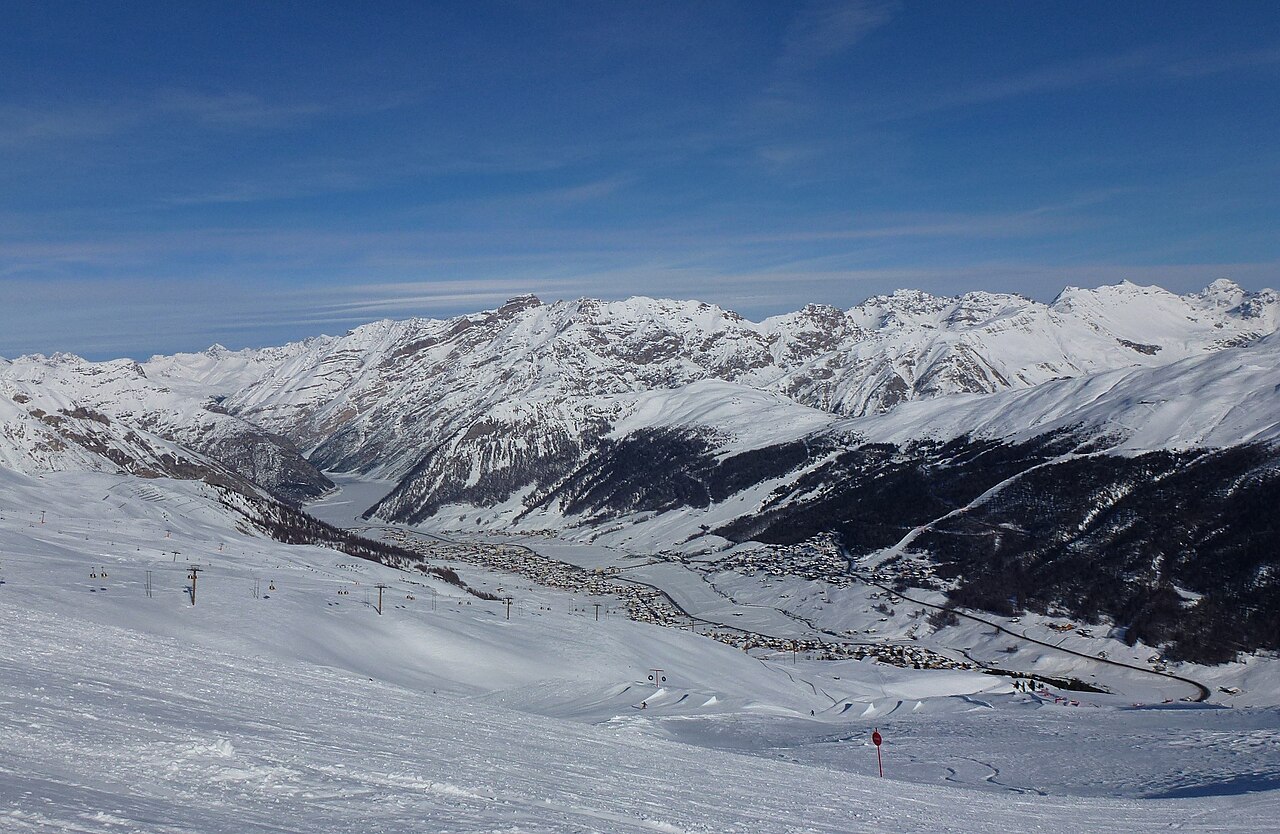
Livigno gives you two sides of a long alpine valley, with Carosello 3000 and Sitas on one side and Mottolino on the other. Choose accommodation around your lessons and preferred terrain, then check whether your dates and property qualify for a ski-pass offer.
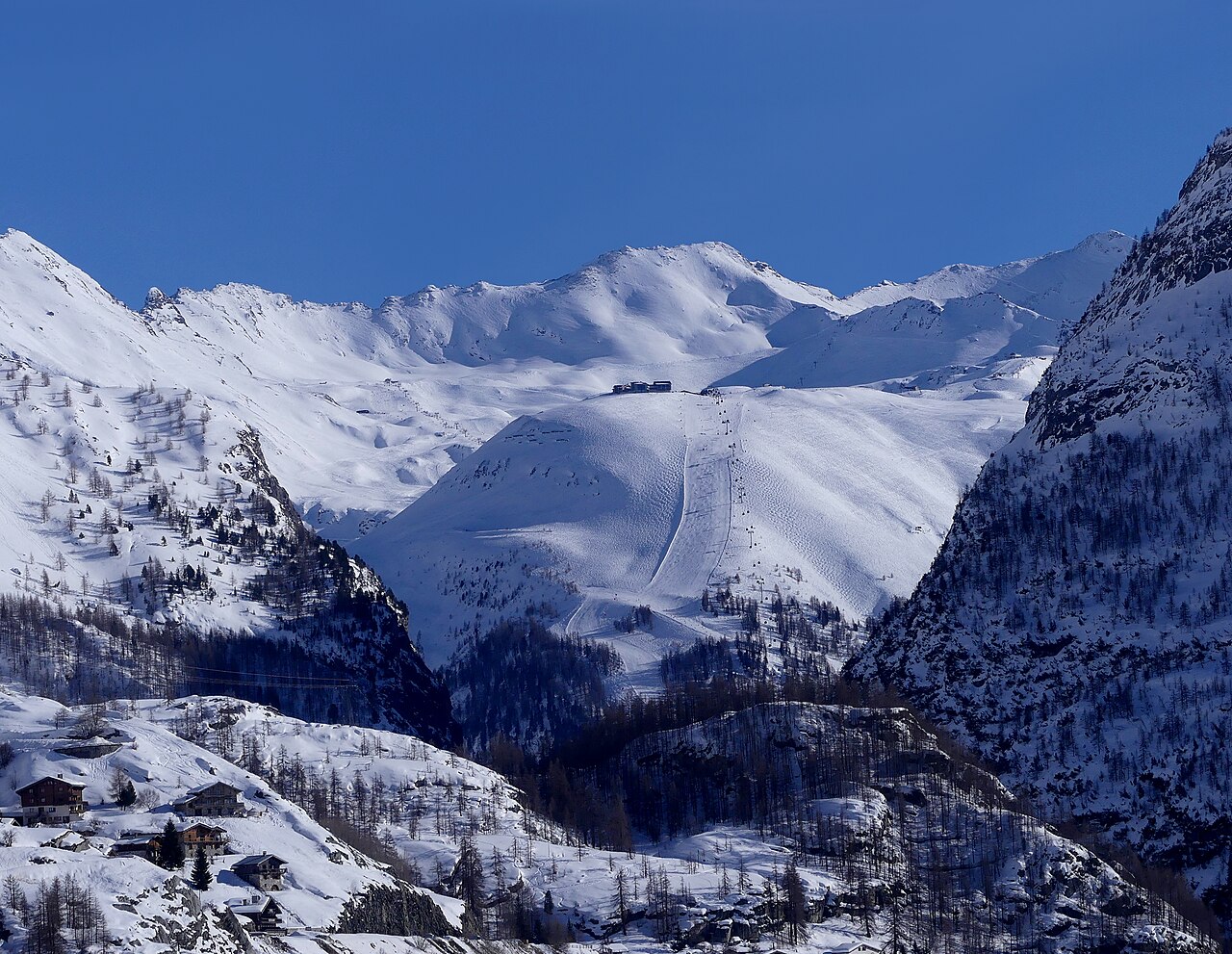
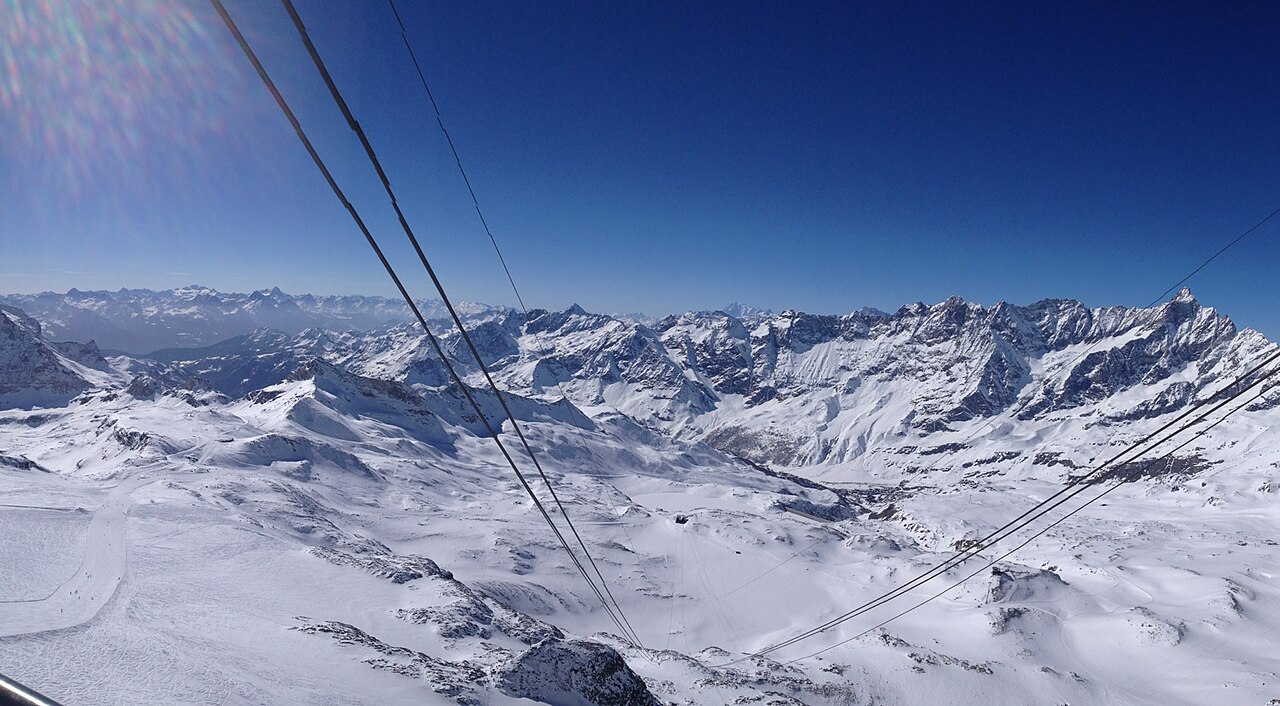
A Cervinia trip can mean first lessons near the village, laps around Plan Maison or a longer day reaching Valtournenche or Zermatt. Match your pass and accommodation to that plan, and decide how to return from the Swiss side before setting off.
Madonna di Campiglio pairs short, steep classics like Spinale direttissima and Canalone Miramonti with blue runs of 3–5 km. Choose a base by lift and ski bus, not just by the map. Then decide whether your pass should cover only the Campiglio SkiArea or the wider Skirama Dolomiti.
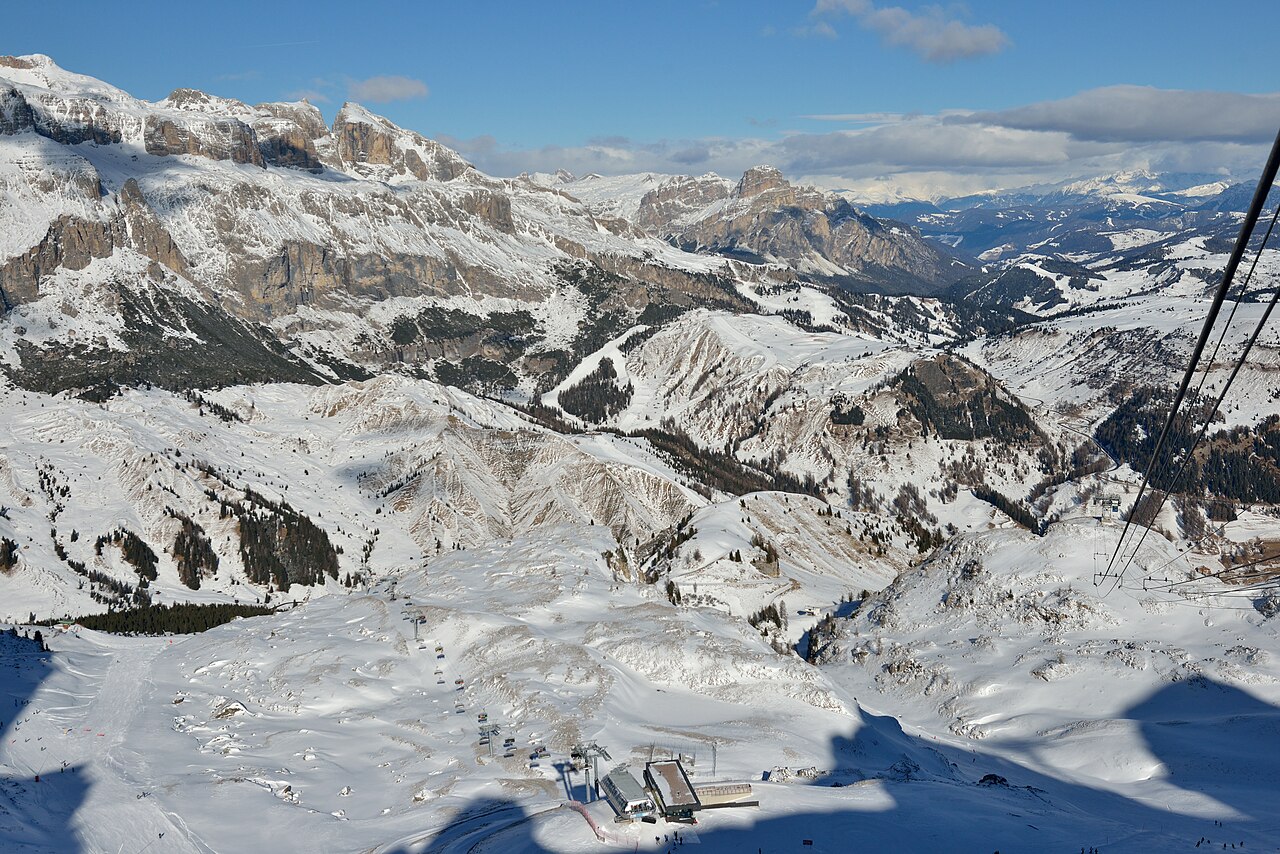
Arabba is a small Ladin village at 1,602 m with lifts leaving from its centre, on the Sellaronda and linked over the Padon ridge to the Marmolada, the highest peak in the Dolomites. Ski the steep Porta Vescovo side, loop the Sella massif, then ride the cable car to Punta Rocca for the 12 km descent to Malga Ciapela.
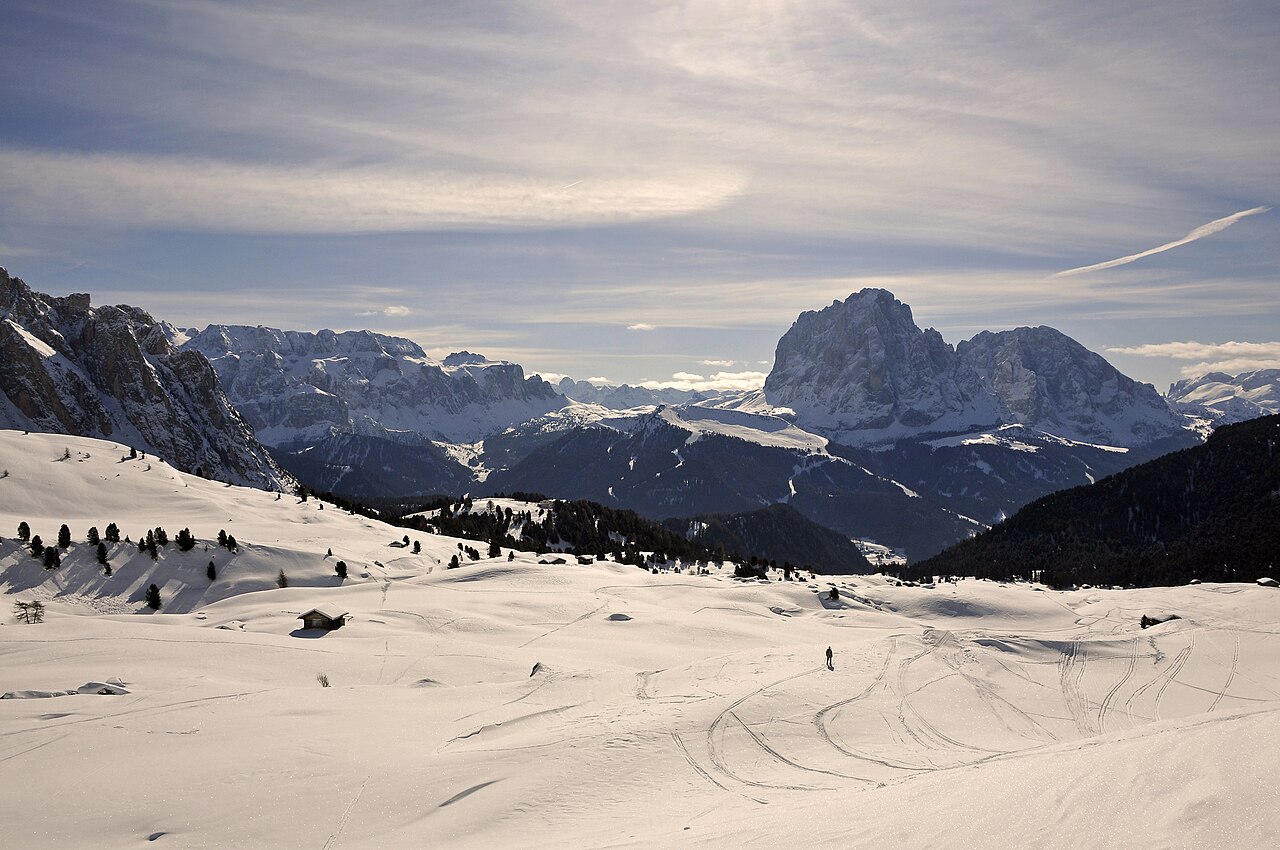
Val Gardena strings three villages — Ortisei, Santa Cristina and Selva — beneath Seceda, the Sassolungo and the Sella massif. Pick your base by the lift you will use most, then decide whether a local Val Gardena/Alpe di Siusi pass is enough or the Sellaronda calls for Dolomiti Superski.
Cortina's skiing is spread over separate mountains around one town — the Tofana and its Olympic race courses, Faloria–Cristallo across the valley, and Cinque Torri–Lagazuoi towards Passo Falzarego. Choose your base by the area you will ski most, then decide whether the Cortina valley pass is enough or Dolomiti Superski is worth it for the Hidden Valley and beyond.
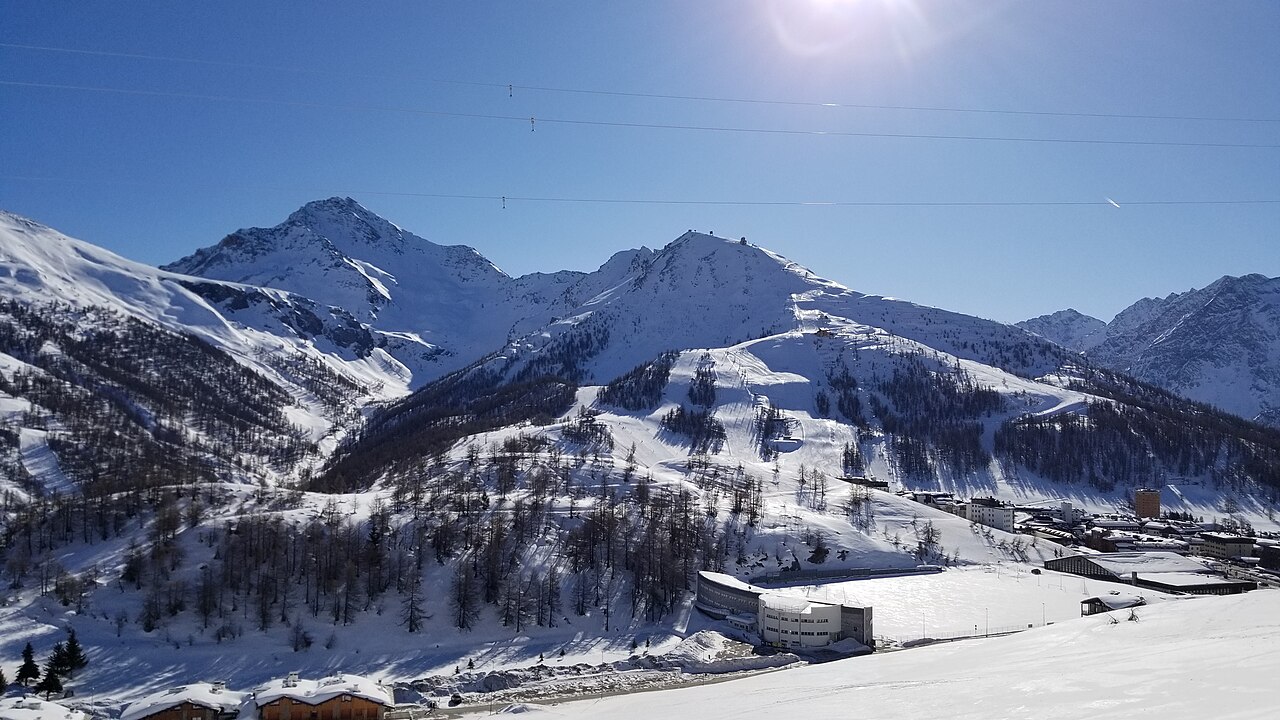
Sestriere sits at 2035 m on the col between the Susa and Chisone valleys and is the busiest base of the Vialattea, the linked area that runs to Sauze d'Oulx, Sansicario, Cesana, Claviere and French Montgenèvre. Its own slopes on Sises, Banchetta, Motta and Fraiteve hosted World Cup races from 1967 and the 2006 Turin Olympics; for 2026–27 the Kandahar will also be floodlit for night skiing.
Val di Fassa strings Ladin villages — Canazei and Alba, Campitello, Pozza, Vigo and Moena — beneath the Sella, the Marmolada and the Catinaccio, each with its own lift into a different ski area. Choose your base by the area you will ski most, then decide whether the valley pass and the Panorama tour are enough or the Sellaronda calls for Dolomiti Superski.
Sauze d'Oulx is the lively Piedmont village at 1,509 m that forms one of the biggest sectors of Vialattea, the 400 km ski area shared with Sestriere, Sansicario, Claviere and Montgenèvre. Above it, the Sportinia plateau at about 2,000 m is the hub for wide, tree-lined runs, and the village is reachable from Turin airport by road or by train to Oulx plus a short bus ride.
Folgarida-Marilleva is the Val di Sole gateway to the SkiArea Campiglio Dolomiti di Brenta, with three family parks and blue runs up to 3 km long. You can ride the narrow-gauge train from Trento straight to the Daolasa gondola. Then decide whether your pass should cover only these slopes or the whole SkiArea with Madonna di Campiglio.
A Zermatt holiday starts with the sector you want to reach each morning. Sunnegga lessons, Gornergrat skiing and an international day toward Cervinia do not have the same approach. Match your accommodation and pass before booking the final train or transfer.
Verbier mixes long reds around Attelas and Lac des Vaux with the Mont-Fort black at 3330 m and seven marked freeride itineraries. Choose between a Verbier-Tzoumaz and a 4 Vallées pass, and pick your base by lift: Médran, Savoleyres, Le Châble or La Tzoumaz.
LAAX links Flims, Laax and Falera in one ski area of 216 km, from about 1100 m up to the Vorab Glacier at 3018 m. It is best known for its snow parks and the superpipe on Crap Sogn Gion, but most of the terrain is wide blue and red cruising. Pick a base by the lift you'll use every morning, and book tickets early, because prices are dynamic.
St. Moritz skiing is spread across separate mountains: Corviglia above the town, Corvatsch across the valley, and Diavolezza and Lagalb on the Bernina Pass road, all on one regional pass and linked by bus and train. Choose your base by the mountain you'll ski most. Then compare dynamic Snow-Deal prices with the CHF 55-a-day Sleep + Ski hotel pass.
Davos-Klosters is five separate mountains on one regional pass: Parsenn between Davos and Klosters, Jakobshorn and Rinerhorn on the Davos side, Madrisa above Klosters and Pischa for freeride. Most of the skiing is on Parsenn, from the Weissfluh summit at 2844 m down to the long valley runs. Choose your base by the mountain you'll ski most, because the areas are linked by train and bus, not by lifts.
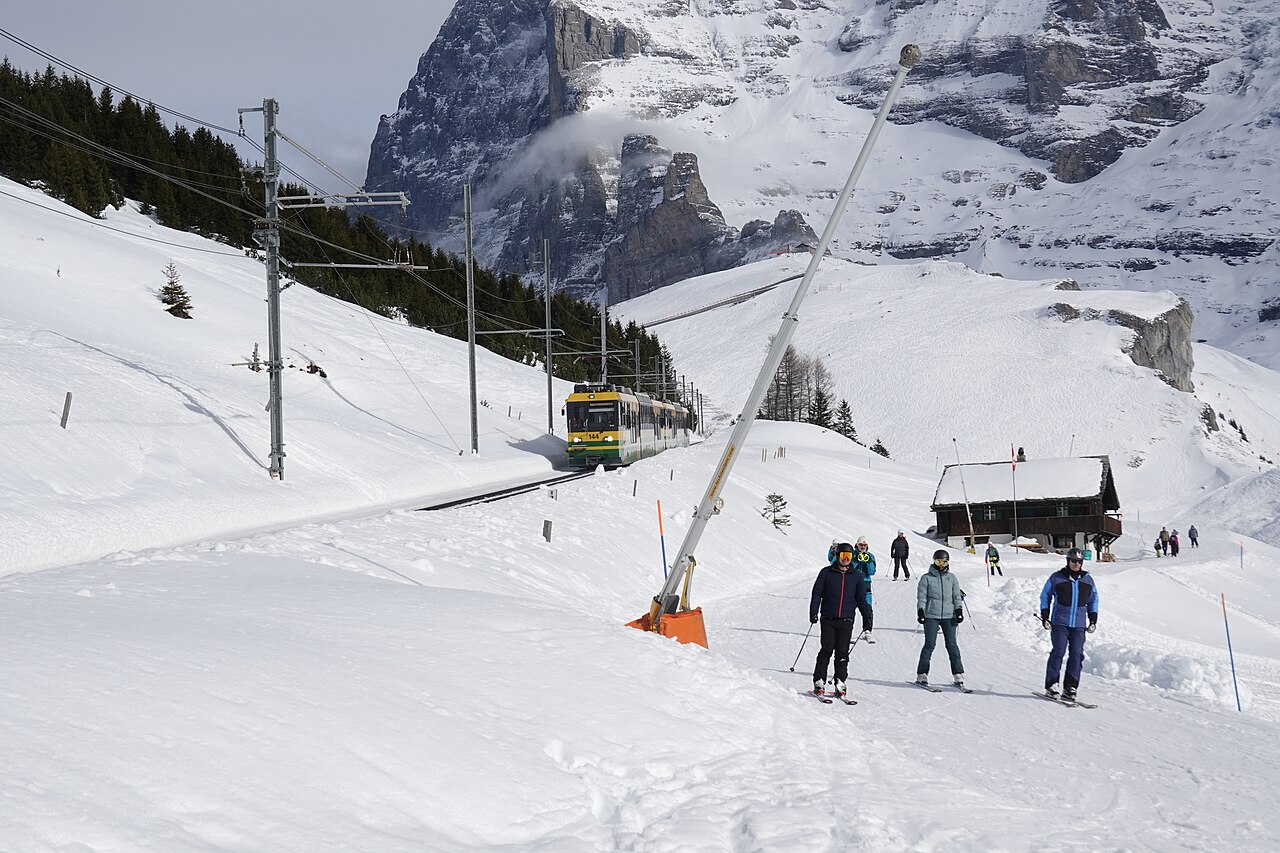
Skiing in Grindelwald and Wengen means one pass and three areas: Kleine Scheidegg–Männlichen between the two villages, Grindelwald-First, and Mürren-Schilthorn across the Lauterbrunnen valley. Pick your base by the area you'll ski most: Grindelwald by train or car, car-free Wengen by rack railway. Then plan around the Lauberhorn, closed for the race in January.
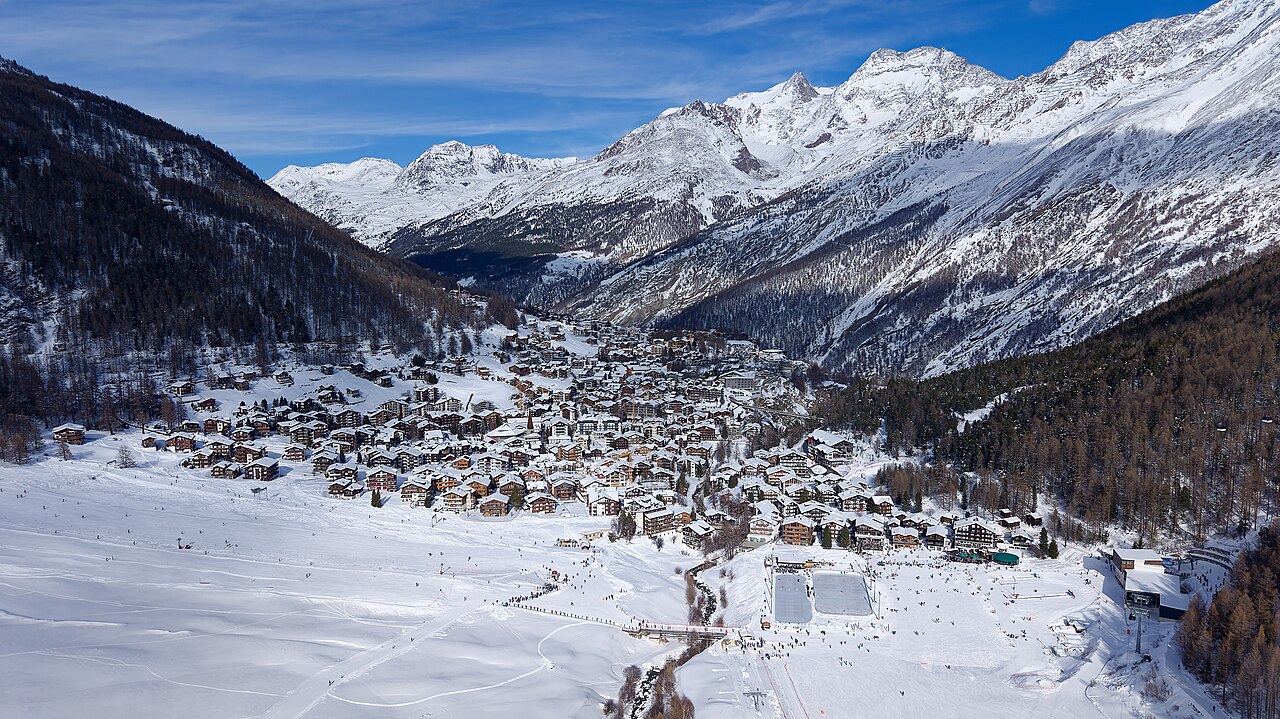
Saas-Fee is the car-free village at the head of the Saas Valley in Valais, with lifts up to the Allalin glacier at about 3,600 m and one of the longest winter seasons in the Alps. Its own runs sit alongside the separate Saas-Grund and Saas-Almagell ski areas, linked by bus and by the valley-wide pass. Choose your pass, base village and transport before you book.
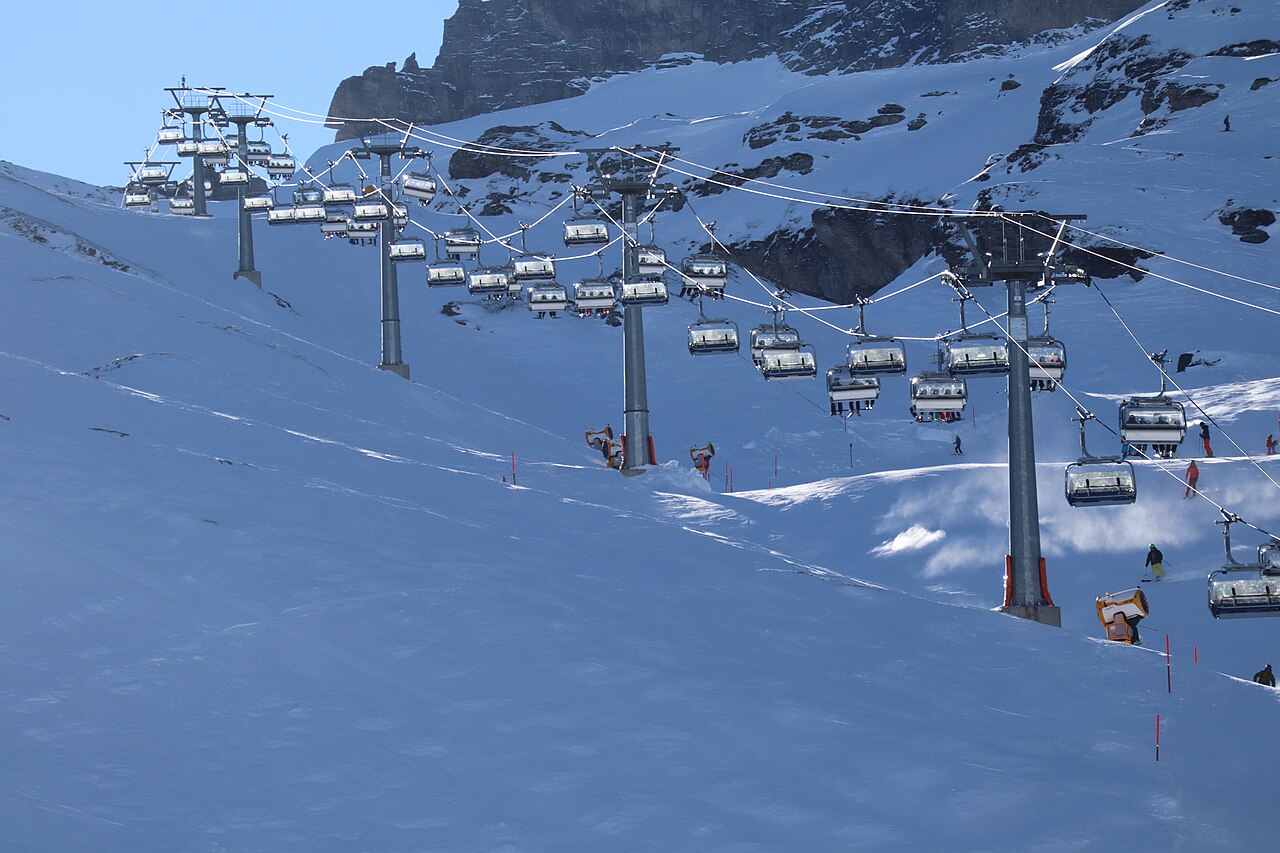
Engelberg is a monastery village 43 minutes by train from Lucerne. It has two ski areas on opposite sides of the valley. Titlis rises from the village to the glacier at 3020 m, with red and black runs, the Jochpass sector and the famous Laub freeride face. Sunny Brunni, with the Klostermatte beginners' slope at its foot, is the gentle family side.
Arosa and Lenzerheide are two Graubünden resorts joined by the Urdenbahn aerial tramway into one 225 km ski area, topping out at 2865 m on the Parpaner Rothorn. Arosa is a village at the end of a mountain railway, with gentle Tschuggen slopes and free lessons for kids; Lenzerheide is bigger and a short PostBus ride from Chur. One pass covers both, and it includes the train or bus from Chur on your ski days.
Crans-Montana spreads 140 km of sunny, south-facing pistes from the resort at 1500 m to the Plaine Morte glacier, linked by three lifts from Crans, Montana and Barzettes. In February 2027 its Mont Lachaux and Nationale slopes host the FIS Alpine World Ski Championships, and for 2026–27 the day pass has a fixed price.
Pas de la Casa is the Grandvalira sector on Andorra's border with France: a busy town at the foot of 16 slopes, linked to Grau Roig's 35 slopes over the hill and on to the rest of the 215 km domain. It is the first access to Grandvalira from France, has the domain's night slope, and its 2026–27 season is scheduled from 4 December to 4 April.
Soldeu and El Tarter are two neighbouring Grandvalira sectors in Andorra's Canillo parish, with 37 and 21 slopes and links on to Canillo, Encamp and, across the domain, Pas de la Casa. Soldeu has the Avet World Cup slope and the hotels; El Tarter has the 1.3 km snowpark and the Àliga. The 2026–27 season is scheduled from 4 December to 4 April.
Pal Arinsal is Andorra's western ski area: two sectors, Pal and Arinsal, linked by a cable car, with 63 km of slopes between 1,550 and 2,560 m. The live list counts 47 slopes – 27 in Pal and 20 in Arinsal – and you can start from Arinsal village, the La Massana gondola or the Pal car parks. The 2026–27 season is scheduled from 4 December to 4 April.
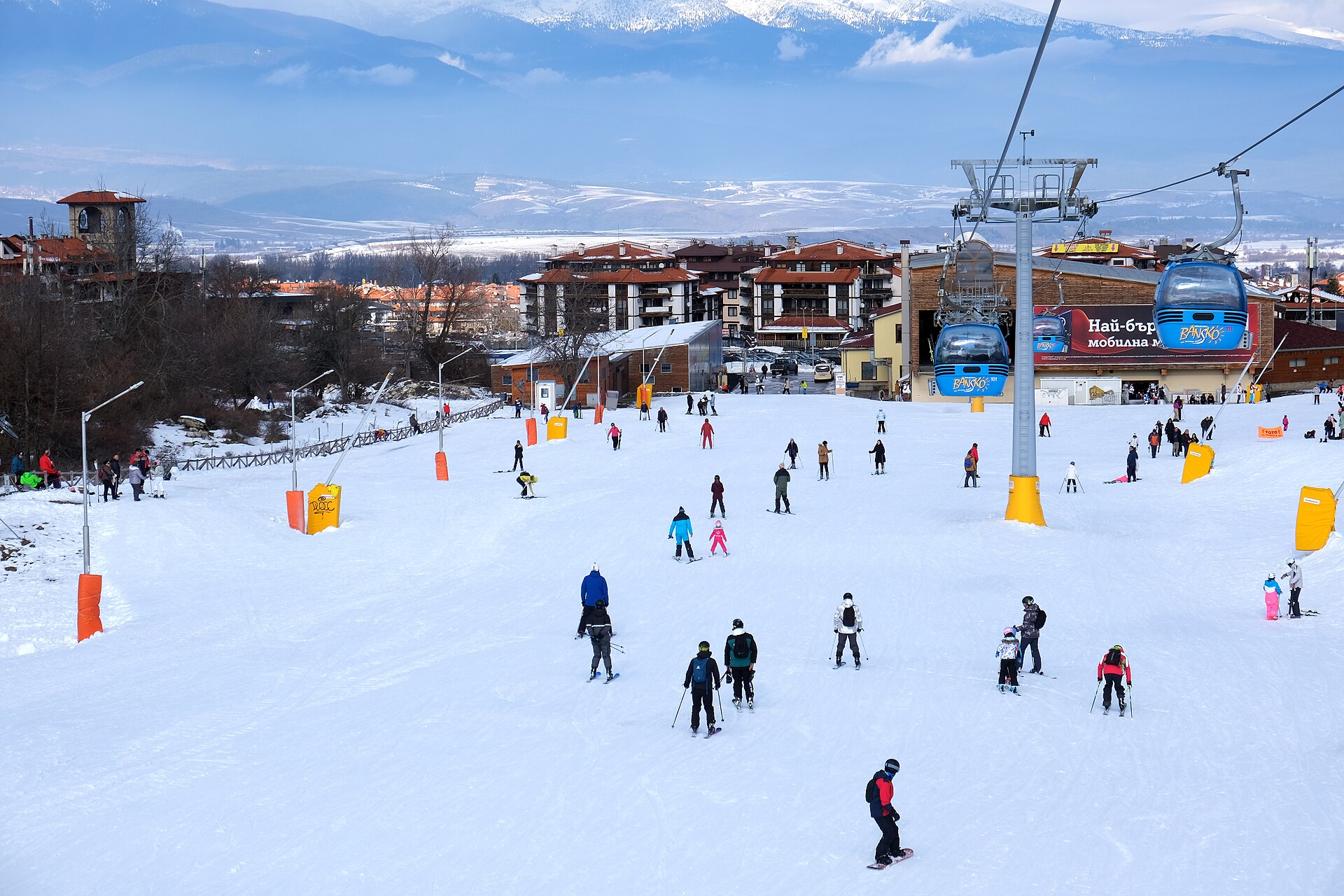
Plan the journey from your accommodation to the first lift as carefully as the flight. A room in Bansko and a meeting point on the mountain are separate parts of the day.
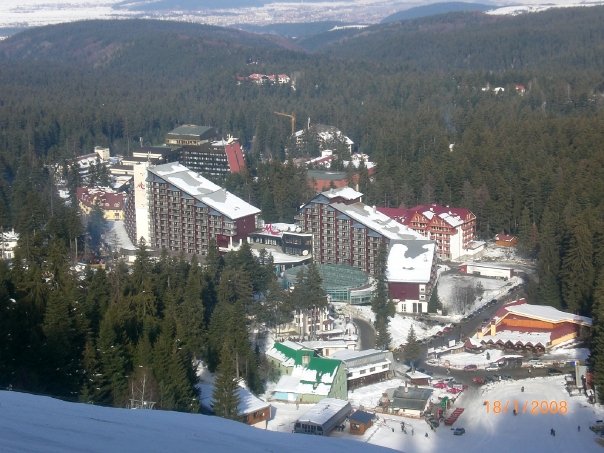
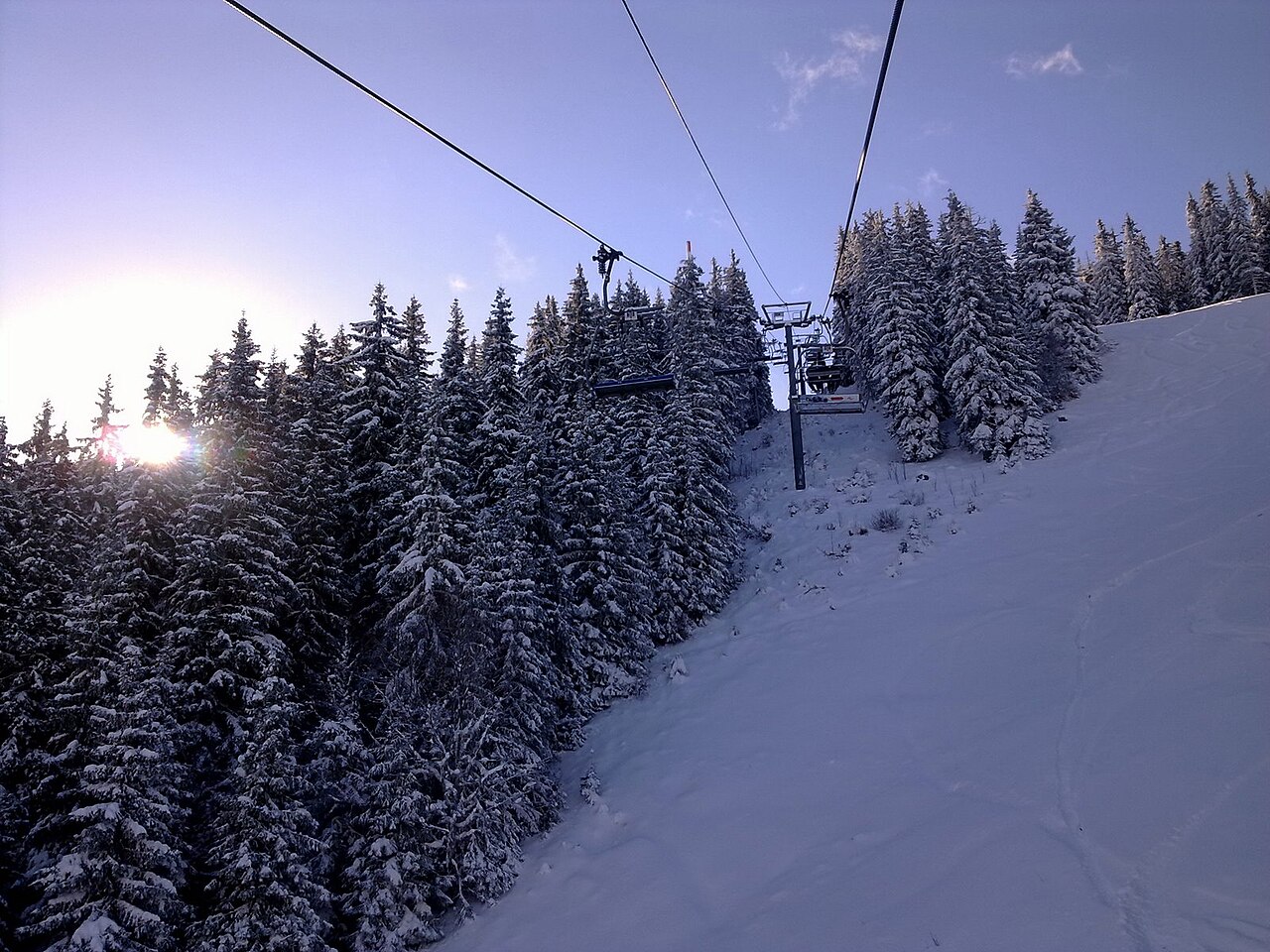
A Borovets week can start on the learning slopes near Hotel Rila or with a gondola journey toward the higher terrain. Put the school, equipment collection and first lift on the same morning plan, especially when the group includes children.
Pamporovo, in Bulgaria's Rhodope Mountains, is built for learning and cruising: most of its official runs are green or blue, with a few short blacks around Snezhanka peak, including the Stenata, known as The Wall. The same lift pass also covers the Mechi Chal ski area above Chepelare, 8 km away by road.
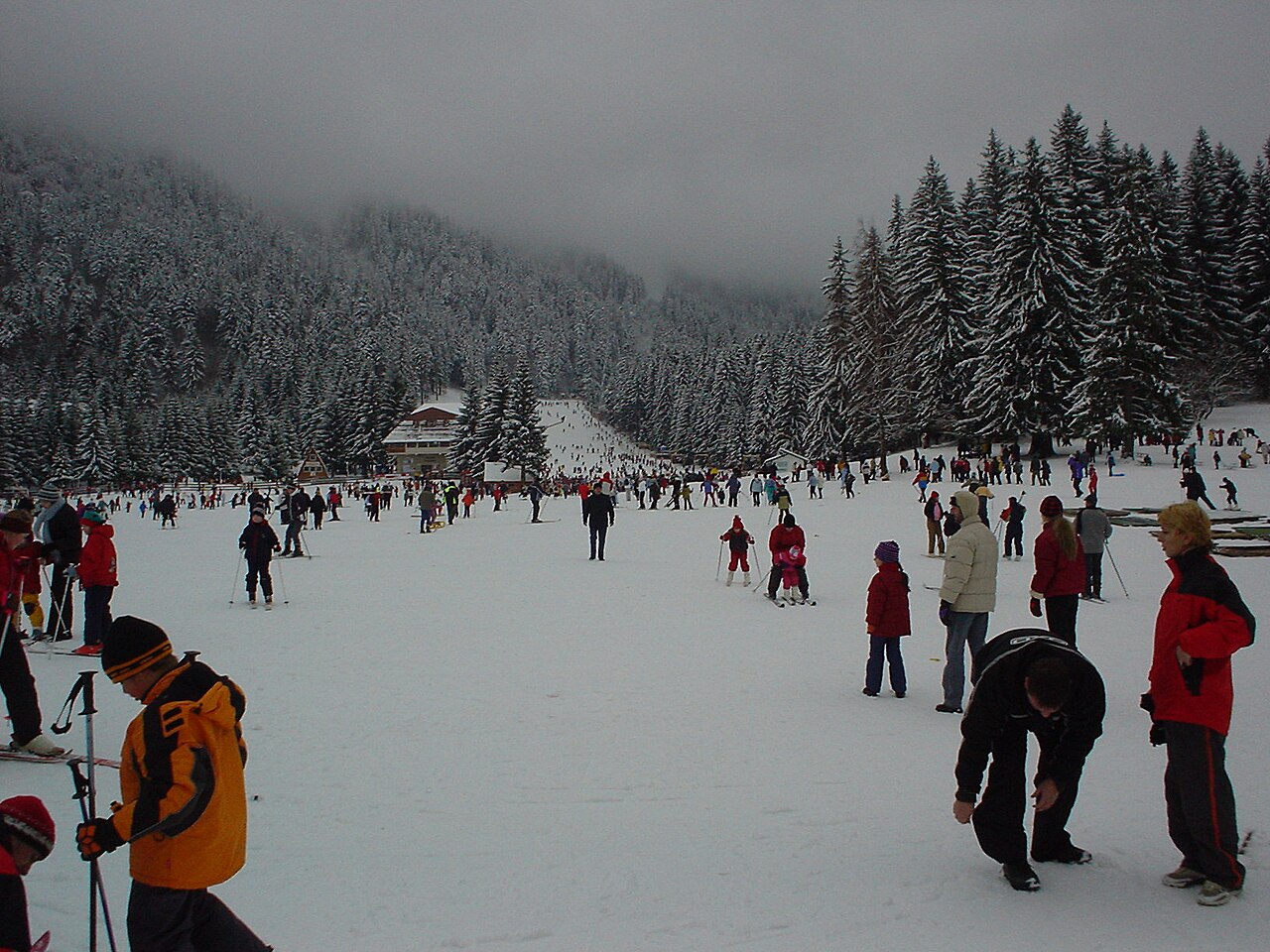
Choose between a lesson near Bradul or Stadion and a day using the upper mountain. The right accommodation depends on that first meeting point and on whether you want to stay in the resort or commute from Brașov.
Sinaia climbs from the Prahova Valley to Cota 2000, just below Vârful Furnica at 2,103 m. The steep blacks above Cota 1400 and the red runs of Valea Dorului and Valea Soarelui suit confident skiers, while beginners start low at Cota 1000. Plan around the plateau's wind and the train from Bucharest.
Predeal sits at about 1,060 m on the pass between the Prahova Valley and Brașov, and its ski area climbs from the Clăbucet Sosire base (1,050 m) to Clăbucet Plecare (1,451 m). It is small and low, but the two blue runs on the drag lift, two long reds and one black make it easy to plan a short trip by train or a few days of practice.
Kranjska Gora, in Slovenia's Upper Sava valley under the Julian Alps, packs 18 numbered slopes, night skiing and a World Cup hill into one compact, walkable resort. It is low — 813 to 1600 m — so pick late January or February, stay in the village for convenience or Podkoren for quiet, and check the live slope status each morning.
Vogel sits above Lake Bohinj in Triglav National Park, and the only way up is an 80-person cable car from Ukanc to 1,535 m. Up top, the operator counts up to 22 km of blue and red runs on natural snow only, with views across the Julian Alps. When snow reaches the valley, the 6.8 km Žagarjev graben takes you back down to the cable car.
Krvavec sits above Cerklje na Gorenjskem, about 25 km from Ljubljana and, by the operator's count, 8 km from Ljubljana's Brnik airport. A gondola lifts you from the valley-station car park to Gospinca, where the learning area, ski school and most of the 30 km of groomed slopes between 1450 and 1971 m begin.
Špindlerův Mlýn, one of the Czech Republic's largest ski areas, in the Krkonoše, spreads its runs over both sides of the Elbe valley: Svatý Petr with the World Cup slope on one side, Medvědín and Horní Mísečky on the other. From December 2026 a new chairlift lets you ski from Medvědín to Svatý Petr for the first time. Base yourself in the centre for flexibility, buy passes early on GOPASS, and keep beginners on the short blues and Mísečky.
Jasná, in Slovakia's Low Tatras, spreads across both sides of Mt Chopok: the busier north above Demänovská dolina and the south above Srdiečko and Krupová, linked by cable cars at the summit. Pick your base by the side you'll ski most, buy passes early on GOPASS, and keep beginners on the lower north-side blues.
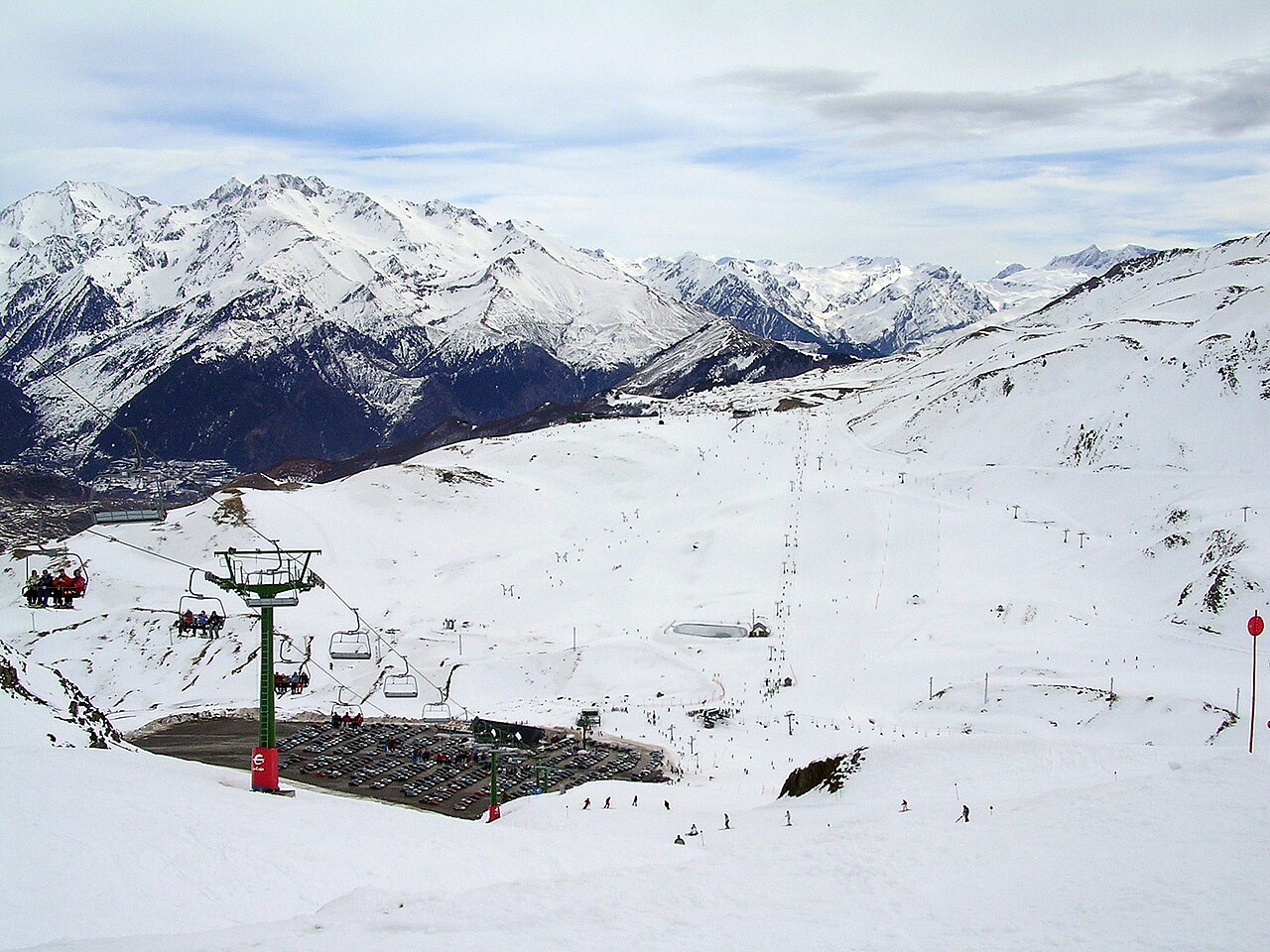
Baqueira-Beret spreads 169 km of pistes across four sectors at the head of the Val d'Aran, on the northern side of the Catalan Pyrenees. Beret's wide blue plateau suits beginners and families, while Bonaigua and Baciver hold most of the black runs. Decide early whether to sleep at Baqueira 1500 by the gondola or down in the valley villages, and which pass card suits your trip.
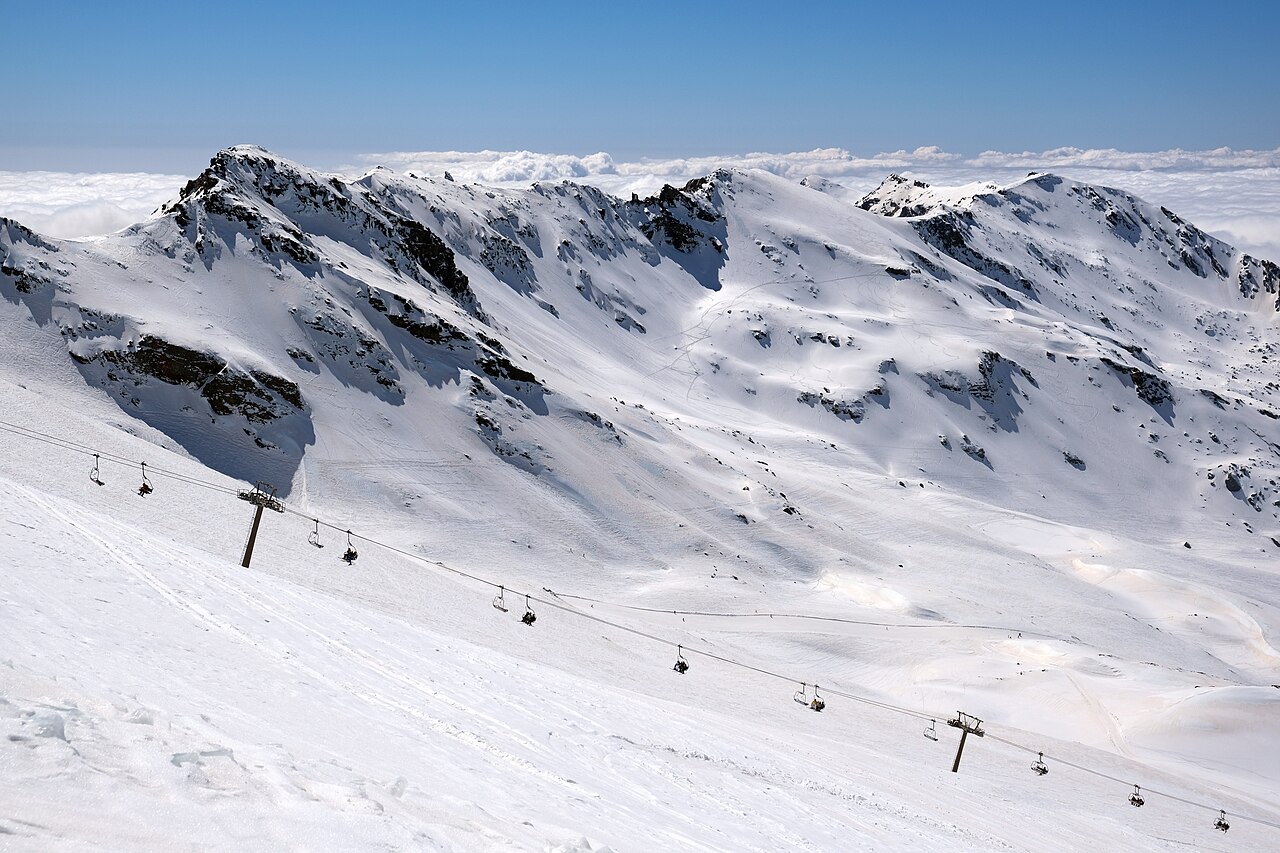
Sierra Nevada rises above Granada, with 134 marked pistes and 112.5 km above the village of Pradollano. Beginners and families stay mostly in Borreguiles at the top of the gondola, while the Laguna and Veleta areas higher up are all red and Loma Dílar holds the blacks. Check the snow, the wind and the bus timetable, and decide whether to sleep at the lifts or in the city.
Formigal-Panticosa links 182 km of runs across six sectors at the head of the Valle de Tena, in the Aragonese Pyrenees, with the Portalet pass to France at its top. Anayet, Sextas and Panticosa's Petrosos suit beginners and families, while Izas - Sarrios and Portalet hold most of the black runs. Decide early whether to sleep in Formigal village, in Sallent de Gállego or in Panticosa, and check the date-based pass prices for your days.
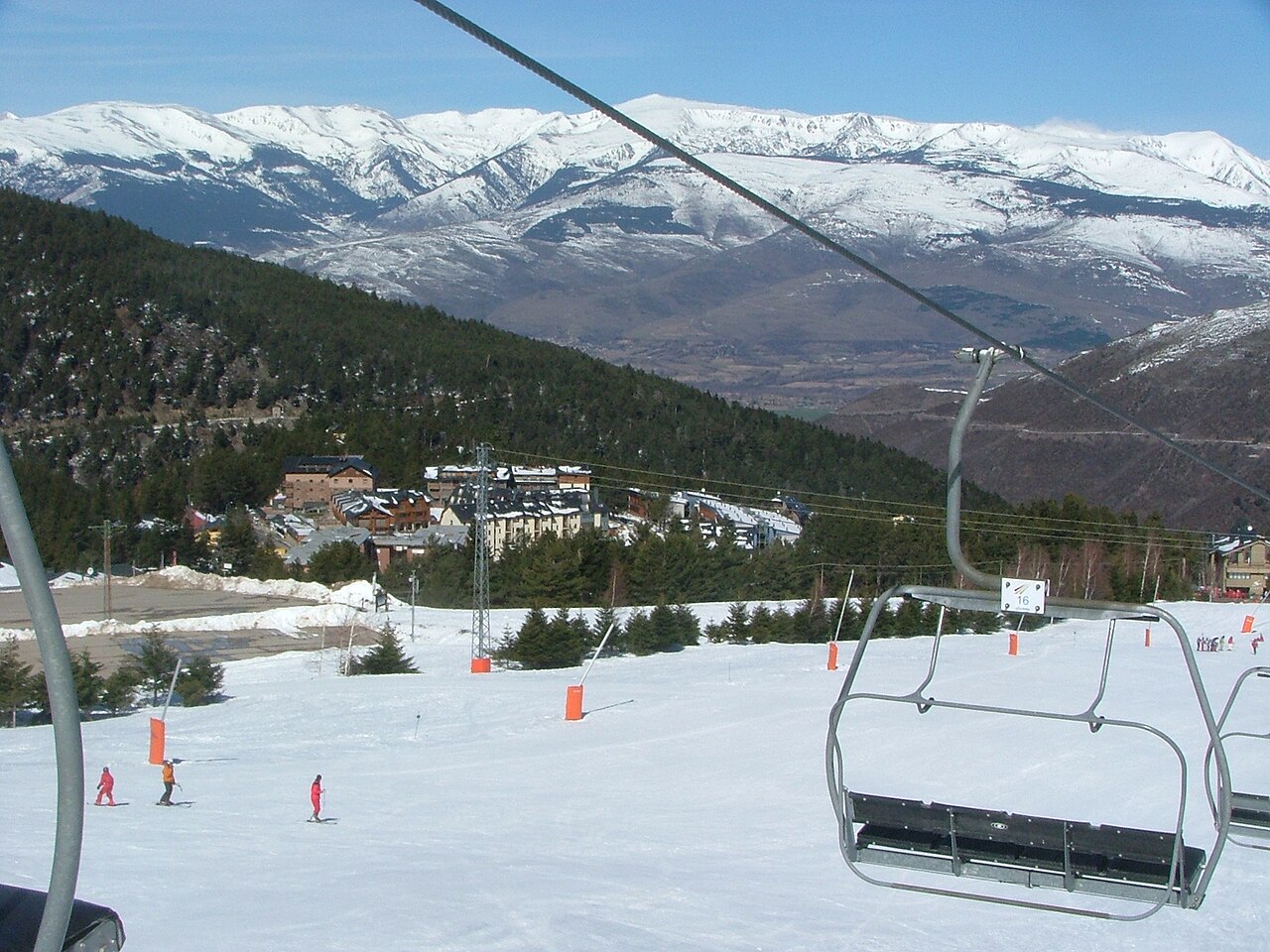
La Molina and Masella share La Tosa d'Alp in the Cerdanya and together make Alp 2500, with 145 km of pistes. La Molina is the railway resort, with the R3 train and a long list of green runs; Masella is the higher-capacity side with the Pyrenees' largest night-skiing area. Decide early whether you need the combined pass and which side to sleep on.
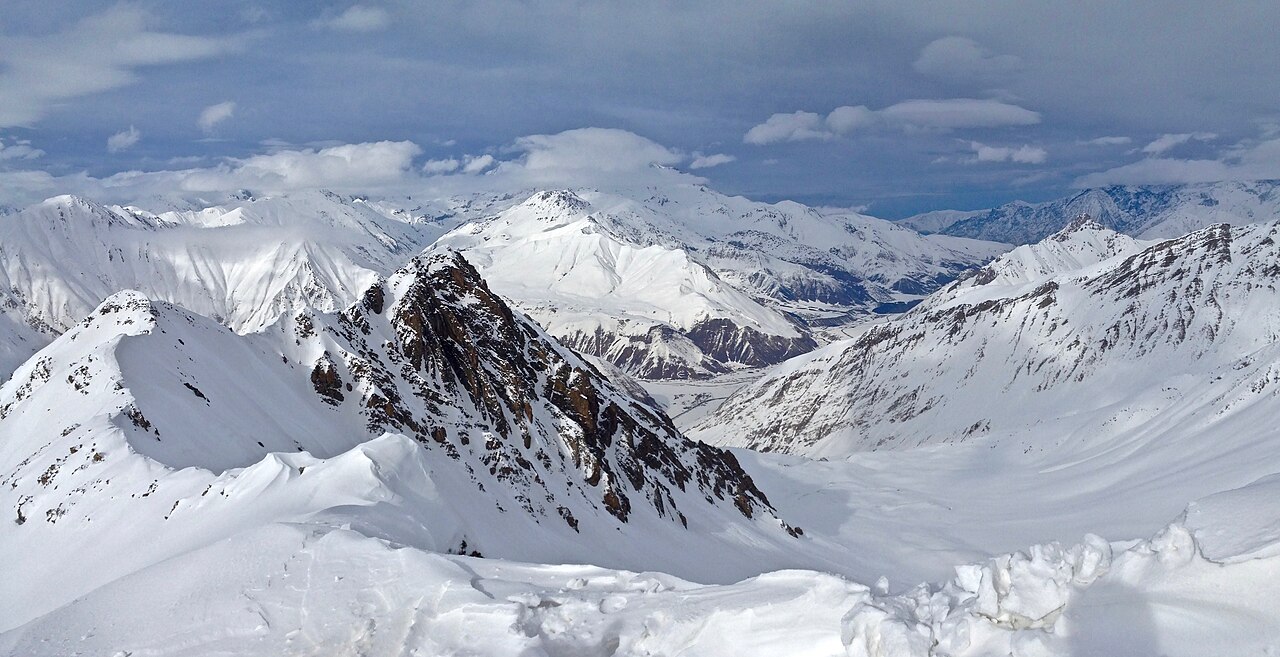
Gudauri sits on the Georgian Military Road, about 120 km north of Tbilisi, with lifts reaching 3,276 m. Most skiing is wide, open blue terrain above New Gudauri, with red and black runs under Kudebi and Sadzele and a gondola link down to Kobi. Plan the road, the pass and your lodging base together, because all three depend on the weather on the pass.
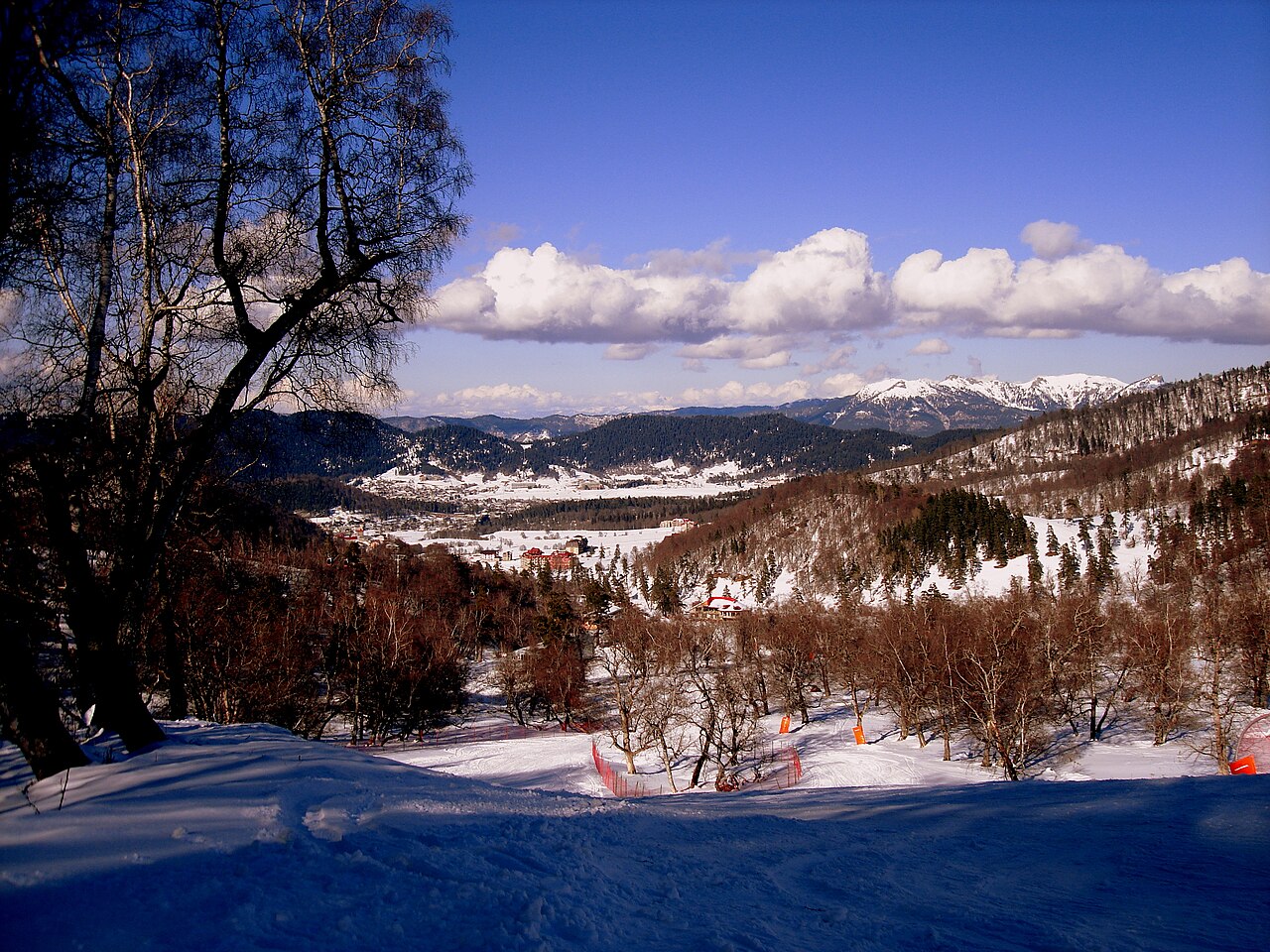
Bakuriani sits at about 1,700 m in Georgia's Borjomi municipality, roughly 180 km from Tbilisi. The state operator MTA runs three separate ski areas here: Didveli, with the most lifts and runs, and the smaller Kokhta and Mitarbi, which are linked by runs. Choose your lodging by area, because heavy snow can make even short drives across town slow.
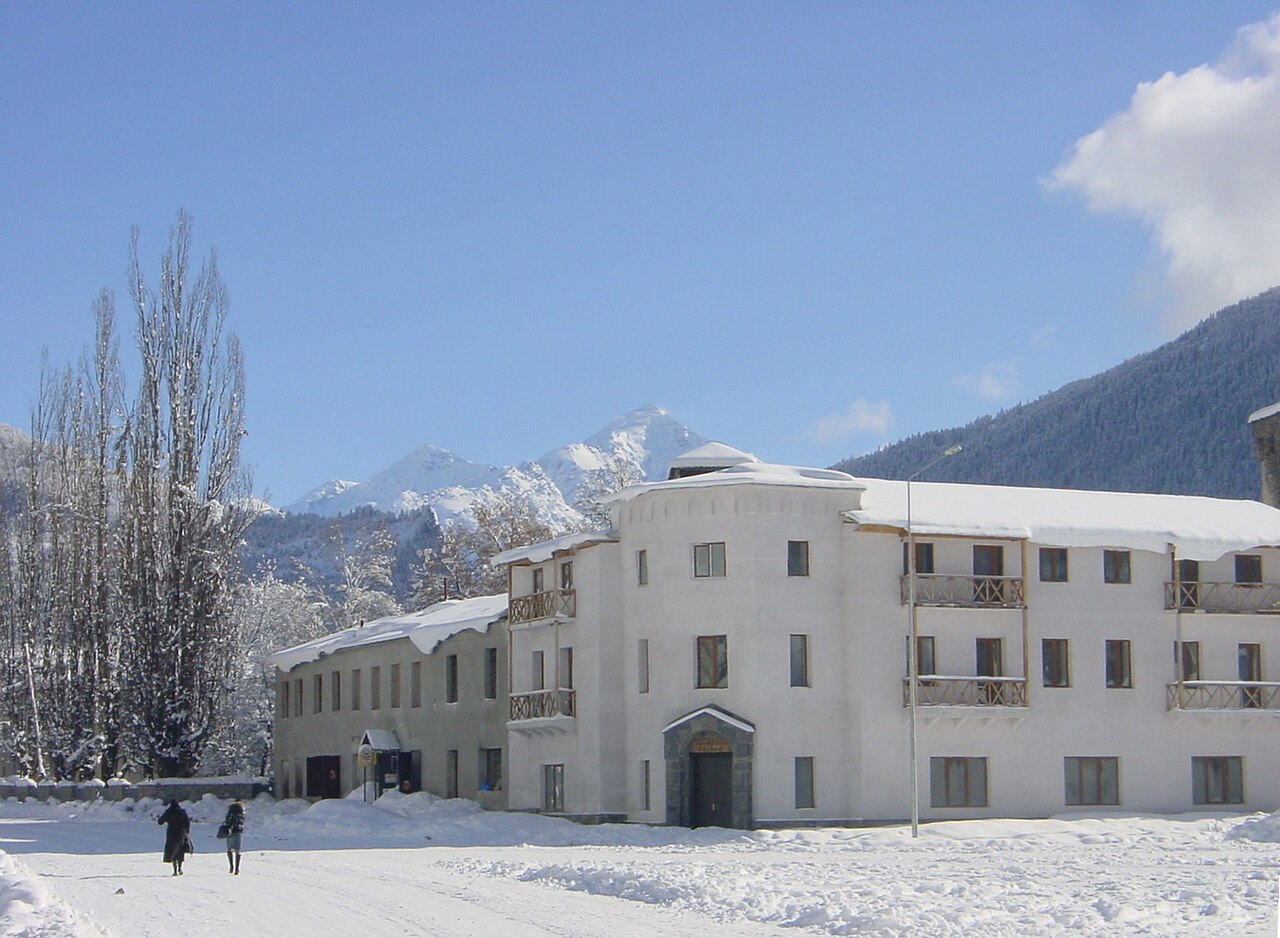
Mestia, the main town of Svaneti in Georgia's Greater Caucasus, has two state-run ski areas: Hatsvali, reached by cable car from town, and Tetnuldi, about 15 km away with lifts to around 3,160 m and a main slope the tourism board puts at 9.5 km. The trip is long and weather-dependent, so plan the flight or road, the last leg to the lifts and your Mestia lodging together.
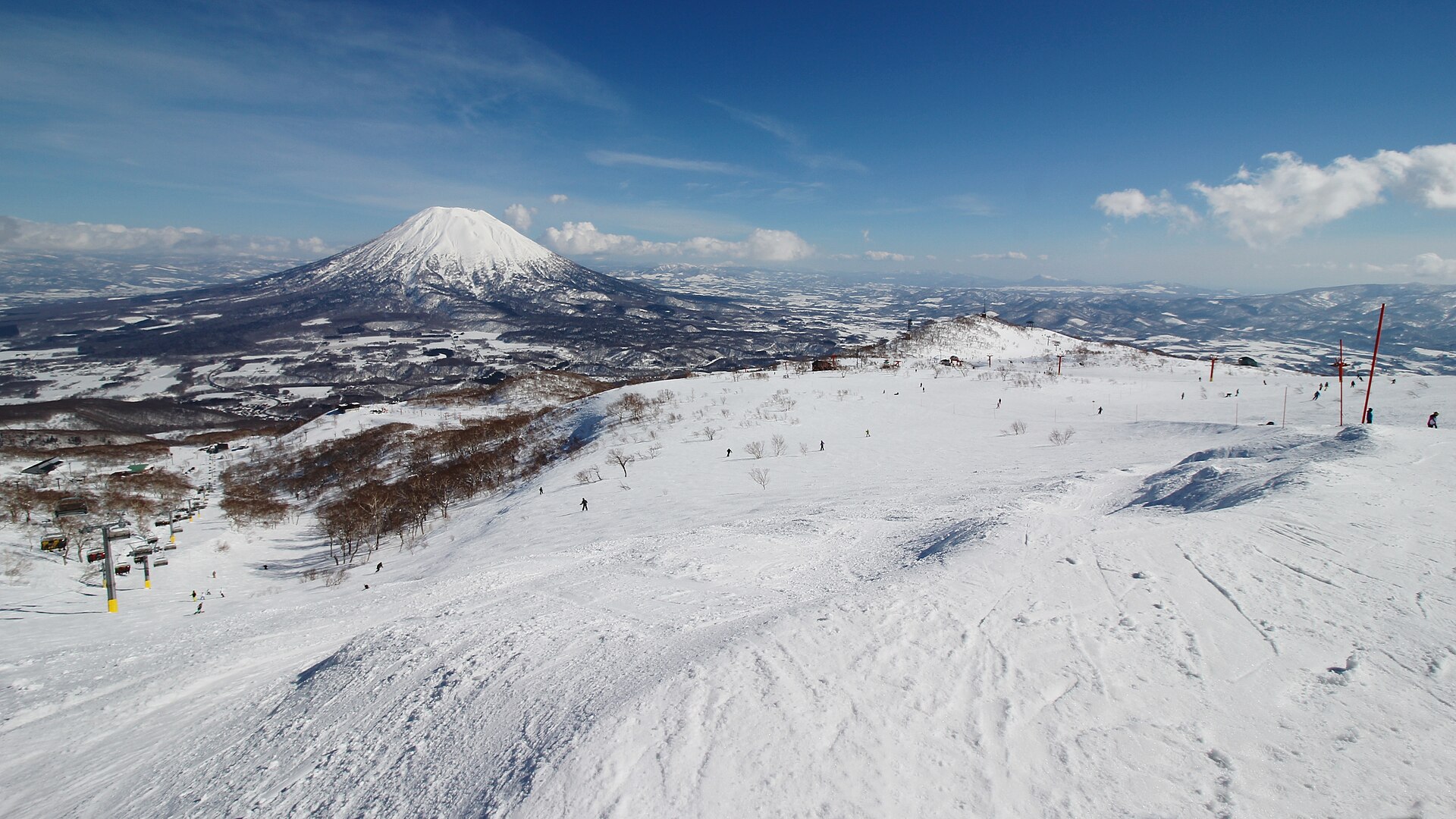
Before booking 'Niseko', choose the base where you want to start each day. Hirafu, Hanazono, Niseko Village and Annupuri are not interchangeable accommodation addresses.
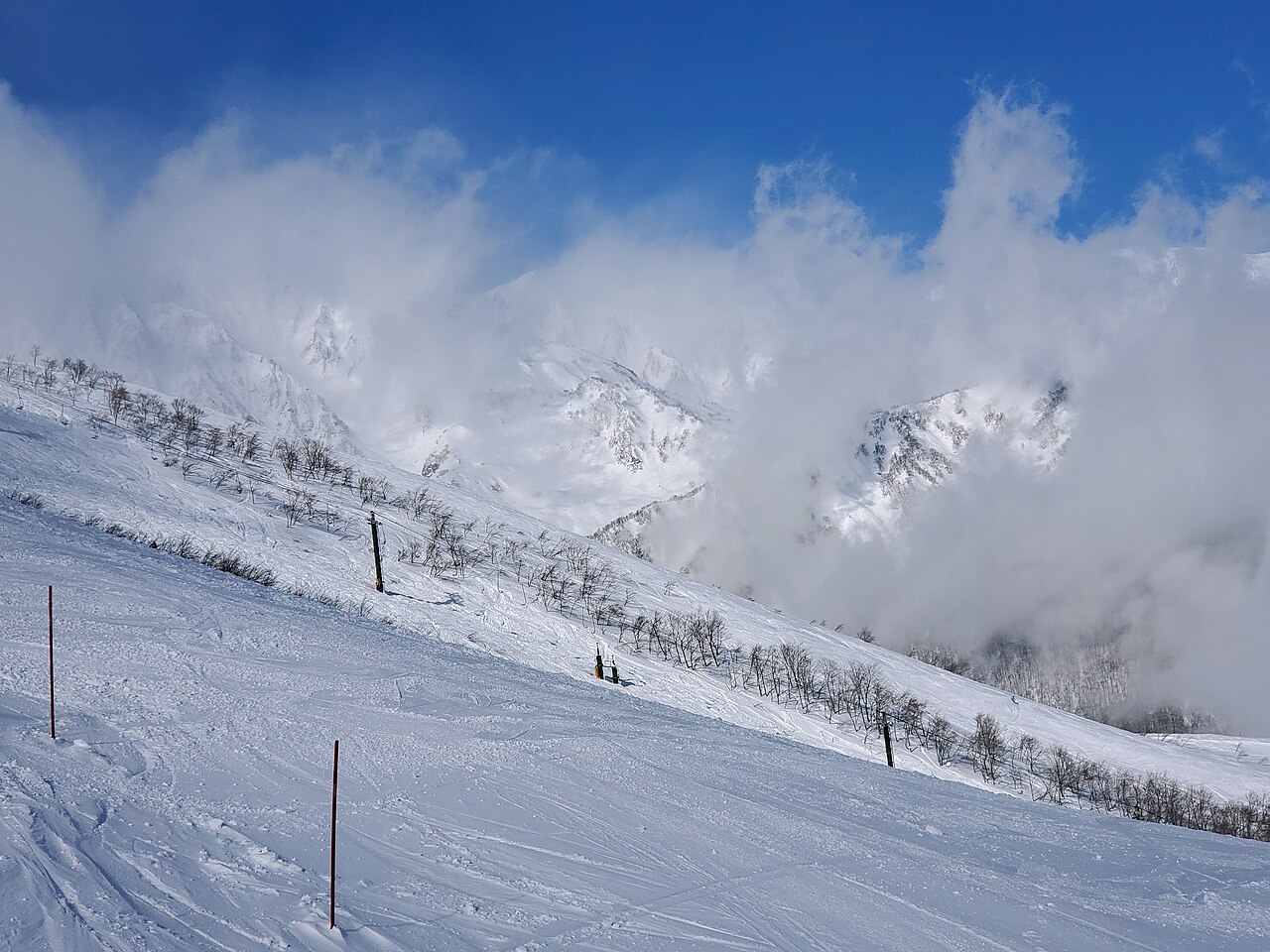
Hakuba is a valley of separate resorts, not one hotel village beneath a single connected piste map. Choose a base around the lessons and resorts you want to use, then decide whether a local ticket or the valley-wide pass fits the week.
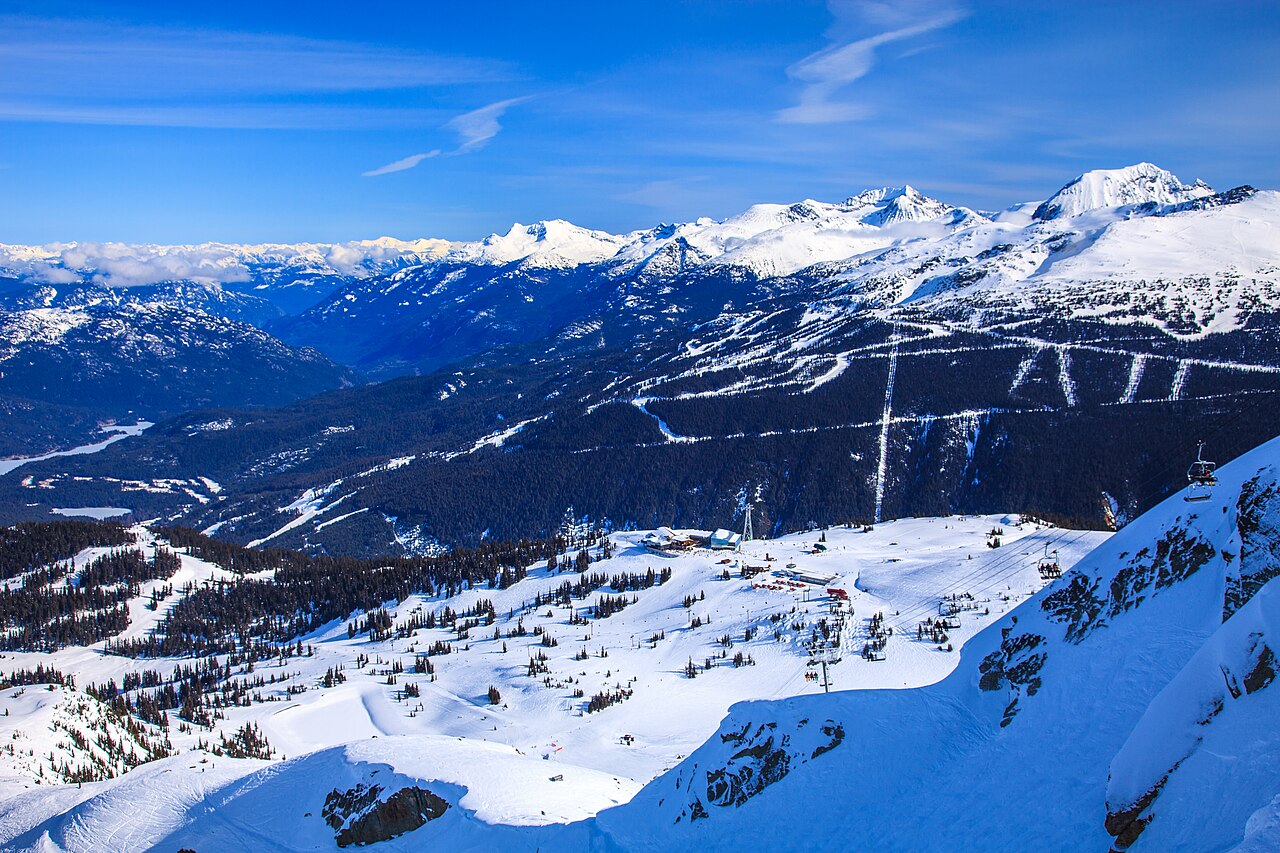
Whistler Blackcomb is two big mountains joined by the PEAK 2 PEAK Gondola, with learning zones on both. Choose your base — Village, Upper Village or Creekside — around lessons and your first lift, and plan the transfer from Vancouver before you book.
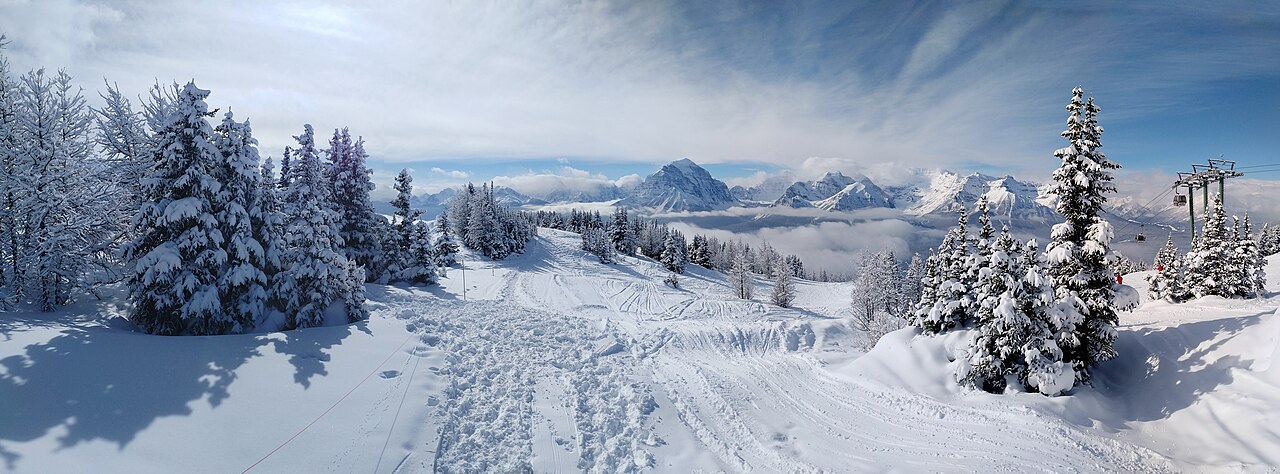
Lake Louise, Sunshine Village and Mt. Norquay share the SkiBig3 ticket but not a lift network. Choose your base, then the mountain for each day, and the shuttles, lessons and partners follow from that.
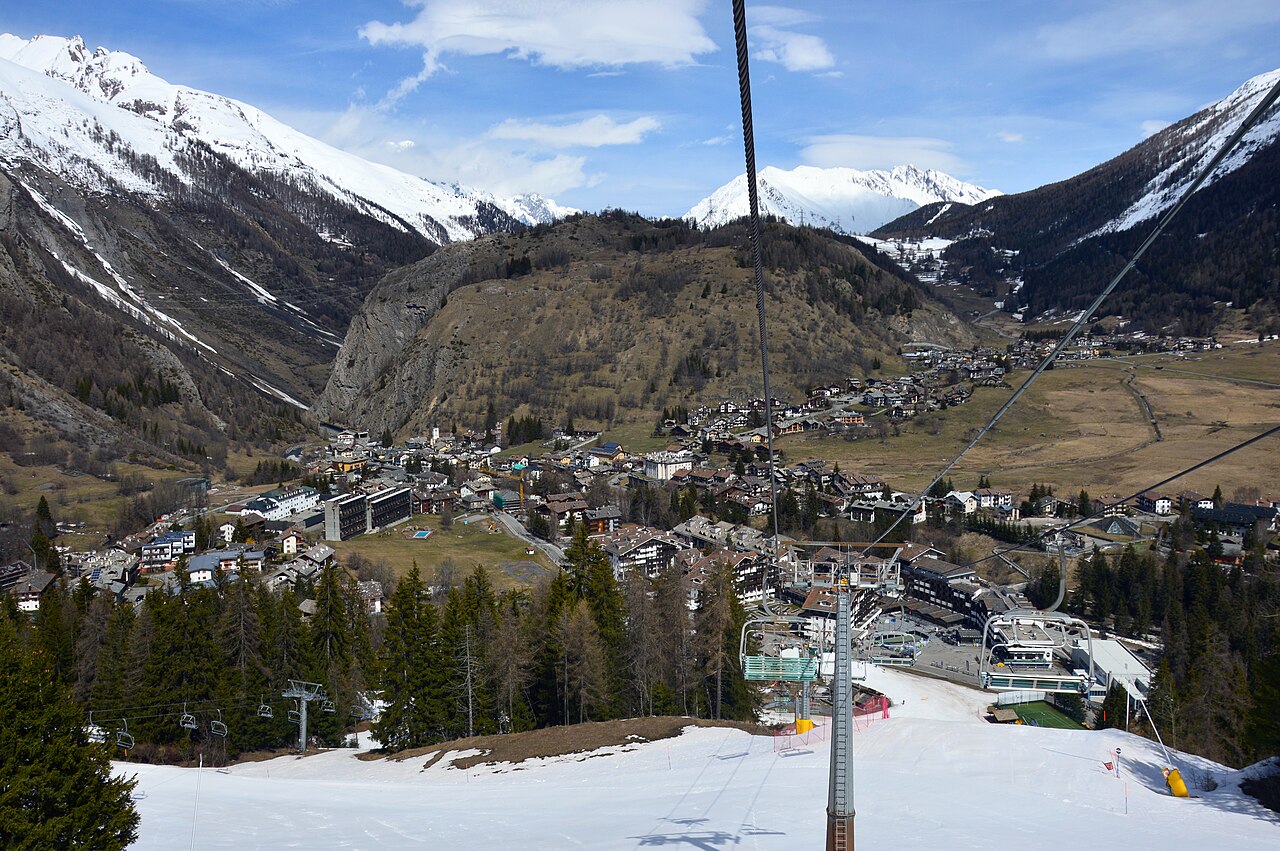
La Thuile is a village in the Aosta Valley with a ski connection to La Rosière in France. It offers an Italian village base and varied terrain. Plan each ski day around your ability, the international link and the journey back to your accommodation.
Champoluc is the Val d’Ayas base of Monterosa Ski in Italy. Start from the village gondola to Crest or the Frachey funicular, and build up to the connections to Gressoney and Alagna when your group is comfortable with the terrain and return times.
The Sella Ronda (Sellaronda) is a ski circuit in the Dolomites linking Val Gardena, Alta Badia, Arabba and Val di Fassa. Plan an area holiday by choosing your village and access lift first, then select a circuit direction and a day that suits your ability and the operating conditions.